XLM +21.29% (Направленная стратегия Resonance)

Разбор сделки через кластерный анализ и дельту: как неэффективность маркет-продаж сформировала точку входа, а восстановление давления продавцов стало сигналом к фиксации прибыли.
Содержание

Монета: XLM/USDT
Риск: средний
Уровень понимания: новичок
Причины входа
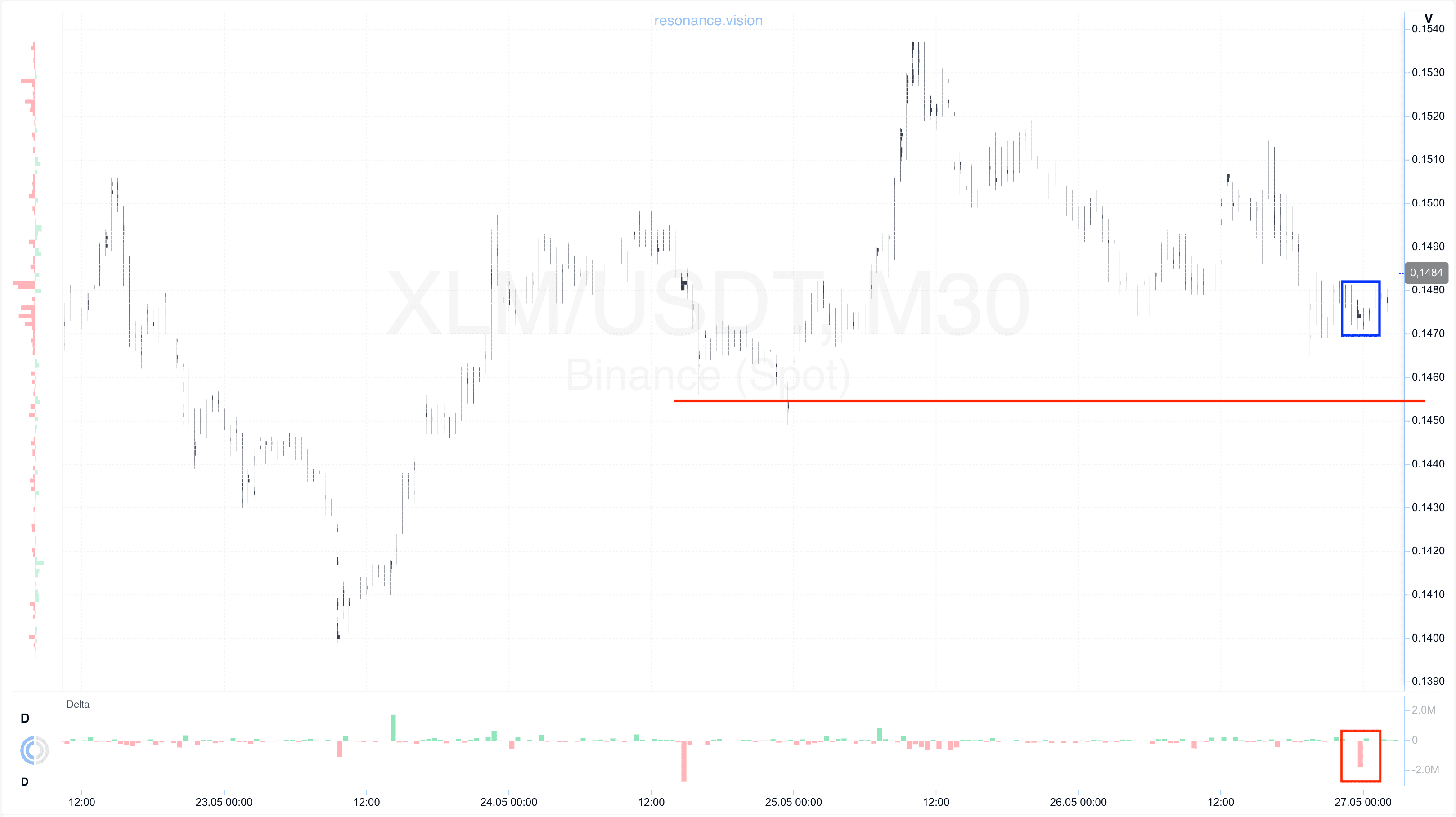
Кластерный график: на локальном откате сформировался бар с крупными объёмными кластерами (синий прямоугольник). Эти объёмы сопровождались выраженным преобладанием маркет-ордеров на продажу (красный прямоугольник).
Однако, несмотря на доминирование продаж, цена не продемонстрировала значимого снижения и не смогла обновить локальный минимум (красная линия).
Подобная реакция указывает на формирование признаков локального дефицита: рынок перестаёт снижаться даже при преобладании продаж, что свидетельствует об ослаблении инициативы продавцов и возможном смещении баланса в сторону покупателей.
Дополнительно важно отметить, что продавцы продолжали расходовать значительный объём, однако их воздействие на цену становилось всё менее эффективным. Подобная структура часто свидетельствует о присутствии сильного встречного спроса со стороны лимитных заявок.
В Дешборде
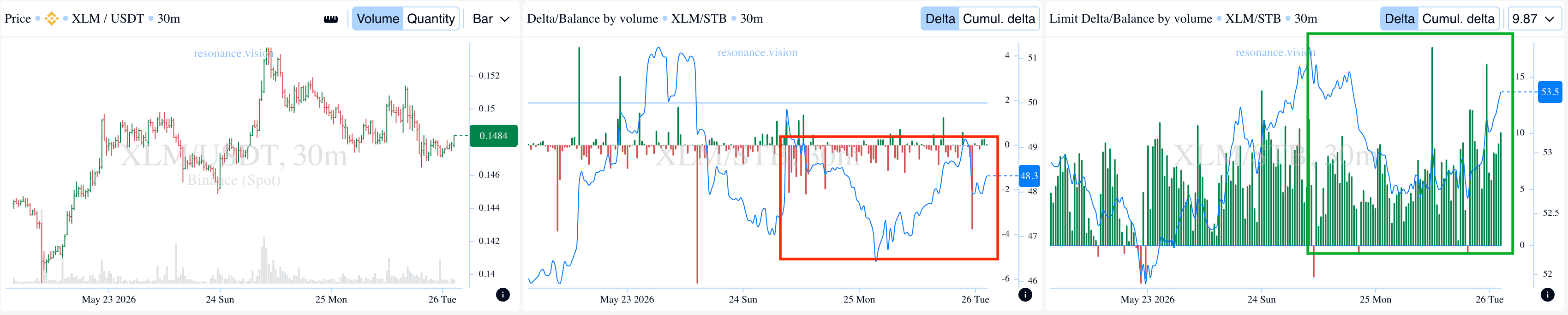
Дельта / Баланс по объёму и лимитная дельта: в агрегированном виде данные по всем парам и биржам подтверждают наблюдения с кластерного графика. В рассматриваемый период фиксировалось продолжительное усиление давления маркет-продаж, что отчётливо отражено на гистограмме дельты. При этом крайние значения продаж продолжали увеличиваться (красный прямоугольник).
Одновременно с этим по лимитной дельте наблюдалось преобладание лимитных заявок на покупку, а в последнем участке движения они стали ещё более выраженными (зелёный прямоугольник).
Такая комбинация указывает на активное поглощение входящего рыночного объёма продаж лимитными заявками на покупку. В результате формируется локальная поддержка в текущем диапазоне, что дополнительно подтверждает признаки дефицита предложения и постепенное смещение баланса в сторону покупателей.
Дополнительным фактором является то, что агрессивные продажи продолжают присутствовать в рынке, однако перестают приводить к обновлению цены. Это усиливает вероятность формирования локального разворота.
Причины выхода
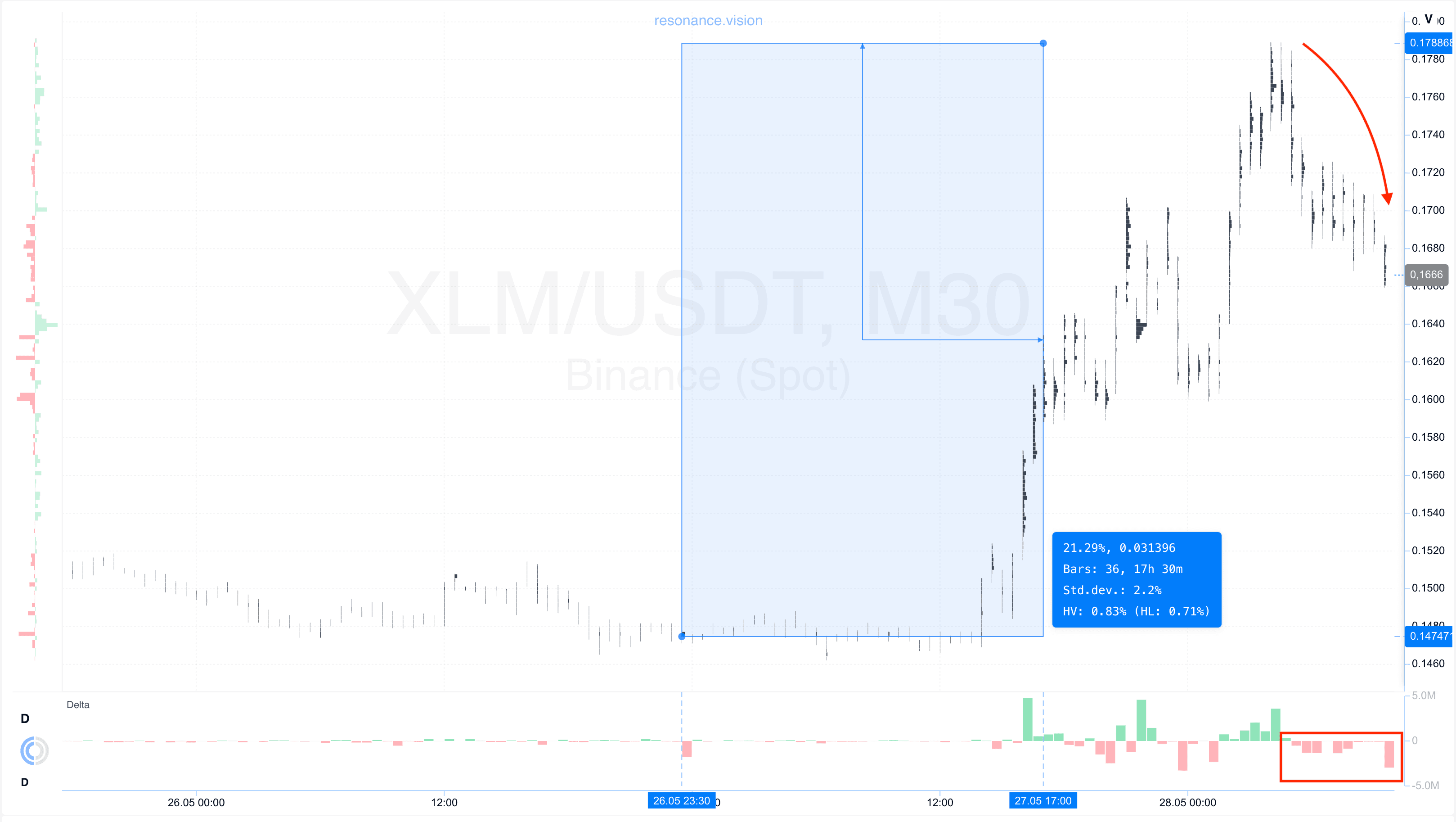
Кластерный график: после точки входа цена выросла более чем на 20%, сформировав уверенное локальное движение.
По мере развития роста существенно увеличилась волатильность, что указывало на расширение рыночной активности и постепенное усиление борьбы между участниками.
Одновременно с этим начали преобладать маркет-ордера на продажу, а актив перешёл в фазу плавного и последовательного снижения (красный прямоугольник и стрелка). В отличие от ситуации на входе, в данном случае продажи уже начали эффективно воздействовать на цену и приводить к её снижению.
Подобная динамика указывает на восстановление инициативы продавцов и рост вероятности более глубокой коррекции.
В условиях появления таких признаков дальнейшее удержание позиции сопровождается ростом рисков. Поэтому фиксация прибыли в данной зоне выглядела рациональным и взвешенным решением с точки зрения управления позицией.
Заключение
Данный разбор наглядно демонстрирует, что ключевое значение в анализе рынка имеет не сам объём, а его эффективность и влияние на цену.
На этапе входа рынок находился под выраженным давлением маркет-продаж, однако цена перестала реагировать дальнейшим снижением и не смогла обновить локальный минимум. Это указывало на ослабление продавцов и активное поглощение их объёма лимитными покупателями, что привело к формированию признаков локального дефицита и создало предпосылки для дальнейшего роста.
Дополнительным подтверждением выступили агрегированные данные дашборда, где продолжительное усиление маркет-продаж сопровождалось преобладанием лимитных заявок на покупку. Подобная комбинация сигналов свидетельствовала о формировании локальной поддержки и постепенном смещении баланса в сторону покупателей.
После входа рынок реализовал уверенное восходящее движение, однако по мере его развития структура начала меняться: выросла волатильность, а маркет-продажи вновь начали эффективно воздействовать на цену, что сопровождалось последовательным снижением актива.
Таким образом, вход был основан на признаках неэффективности продавцов и формировании локального дефицита, а выход — на восстановлении эффективности продавцов и росте вероятности более глубокой коррекции. Подобный подход позволяет принимать более обоснованные торговые решения, опираясь не только на направление движения цены, но и на реальное взаимодействие спроса, предложения и ликвидности внутри рынка.
Следи за новыми статьями в нашем телеграм канале.
Не нужно выдумывать сложных схем и искать “грааль”. Используй инструменты платформы Resonance.
Регистрируйся по ссылке — получай бонус и начинай зарабатывать:
OKX | BingX | KuCoin.
Промокод TOPBLOG дает тебе 10% скидки на любой тарифный план Resonance.
Рекомендуемые статьи