KAITO +83,8% (Направленная стратегия Resonance)

Кейс Resonance: на D1 - продажи без падения цены, на младшем ТФ — маркет-покупки, в дашборде - подтверждение по объёмам. Вход, стоп и выход — пошагово.
Содержание

Продажи есть, а цена растёт — для дейтрейдинга это один из самых информативных сигналов: рыночное давление продавца присутствует, но не даёт результата. В кейсе KAITO такая аномалия на кластерном графике указала на сильный лимитный спрос и формирование локального дефицита. Дальше мы снизили таймфрейм, чтобы увидеть активность рыночного покупателя и получить точку входа. Анализ объёмов в трейдинге подтвердили агрегированные метрики по биржам и парам: покупки доминируют, цена продолжает рост. Это значит, что есть дефицит.
Контекст: дневной график и аномалия “продажи без падения цены”
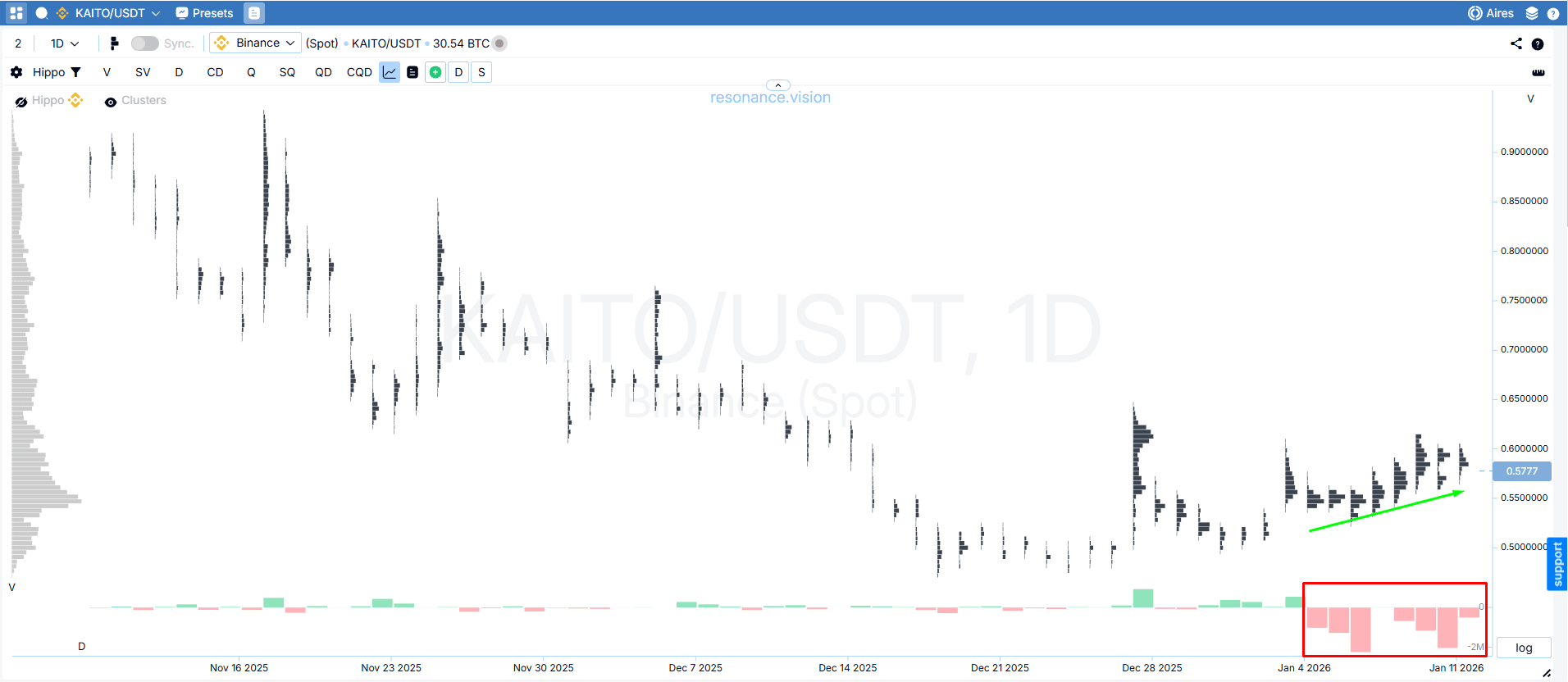
Кластерный график (D1): продавец доминирует, но цена держится и растёт
На дневном таймфрейме видно, что на монете преобладают продажи (красный прямоугольник), при этом цена плавно поднимается (зелёная стрелка). Это классическая неэффективность: объём продавца активен, но импакта вниз нет. Такая картина чаще всего означает наличие сильного лимитного спроса, который поглощает предложение, и повышает вероятность продолжения роста.
Точка входа: переход на меньший таймфрейм
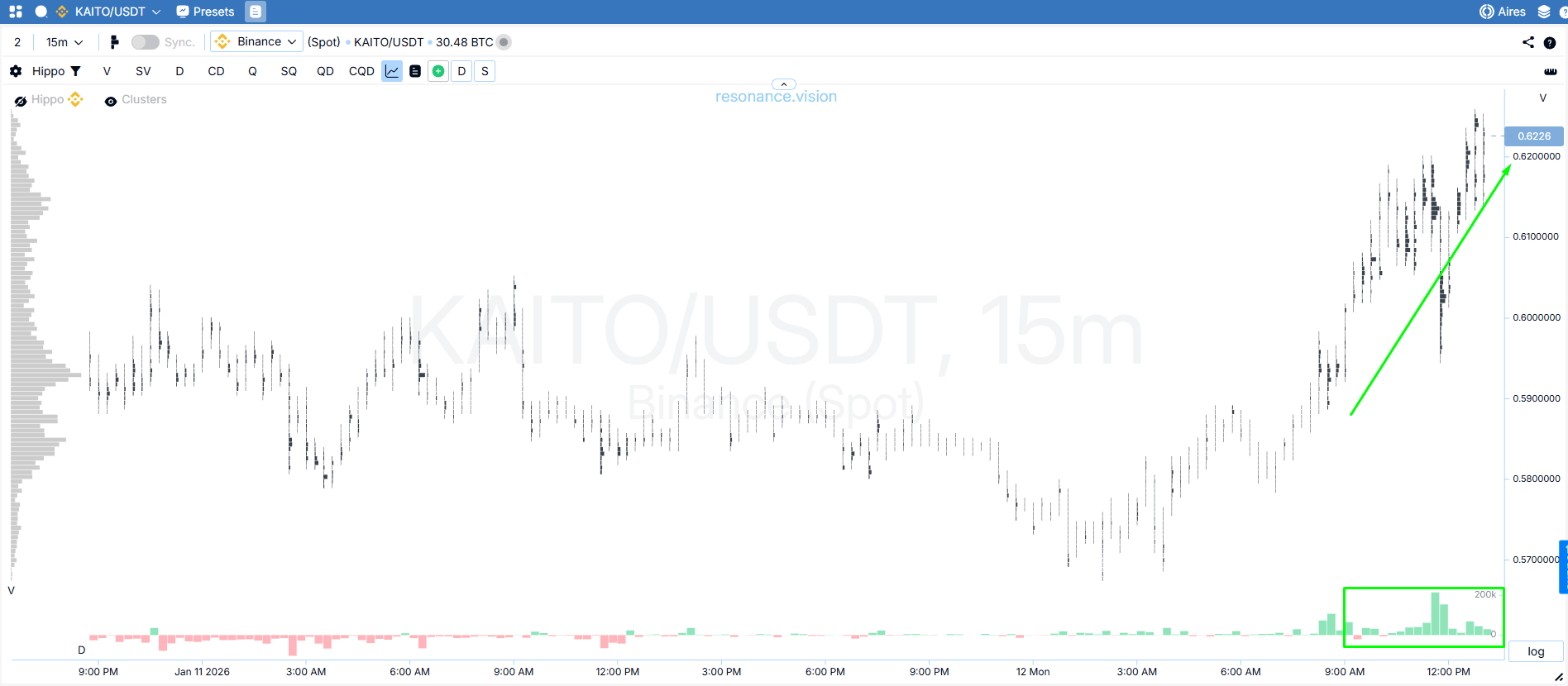
Кластерный график (младший ТФ): появляются маркет-покупки и подтверждается импульс
После участка, где на D1 доминировали продажи, на меньшем таймфрейме становится видно поведение участников: начинают заходить маркет-покупки (зелёный прямоугольник). Цена реагирует ростом и обновляет локальные максимумы (зелёная стрелка). Это подтверждает, что покупатель не просто защищает цену лимитами, а активно двигает её вверх рыночными сделками.
Подтверждение: агрегированные метрики (дешборд)
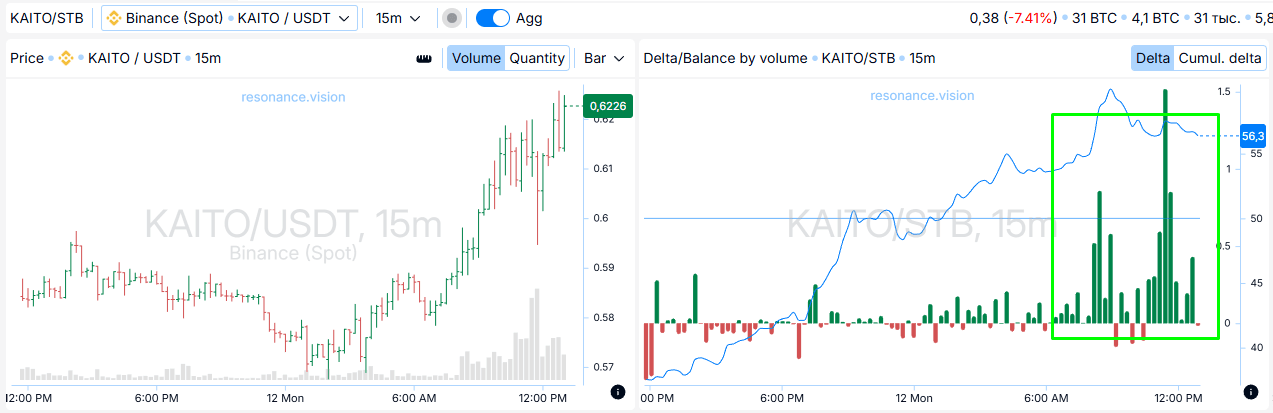
Дельта / баланс по объёму: покупки идут по всем биржам и парам
Чтобы не опираться только на локальный анализ кластеров, подкрепляем идею агрегированными данными. По дельте/балансу видно, что активные покупки действительно идут по биржам и парам: цена растёт, рыночные покупки присутствуют. Это значит,что локальный дефицит подтверждается и вероятность продолжения роста остаётся высокой.
Стоп-лосс логично ставить за ближайший локальный минимум (точка, где структура сломается, если дефицит исчезнет).
Причины выхода и управление позицией
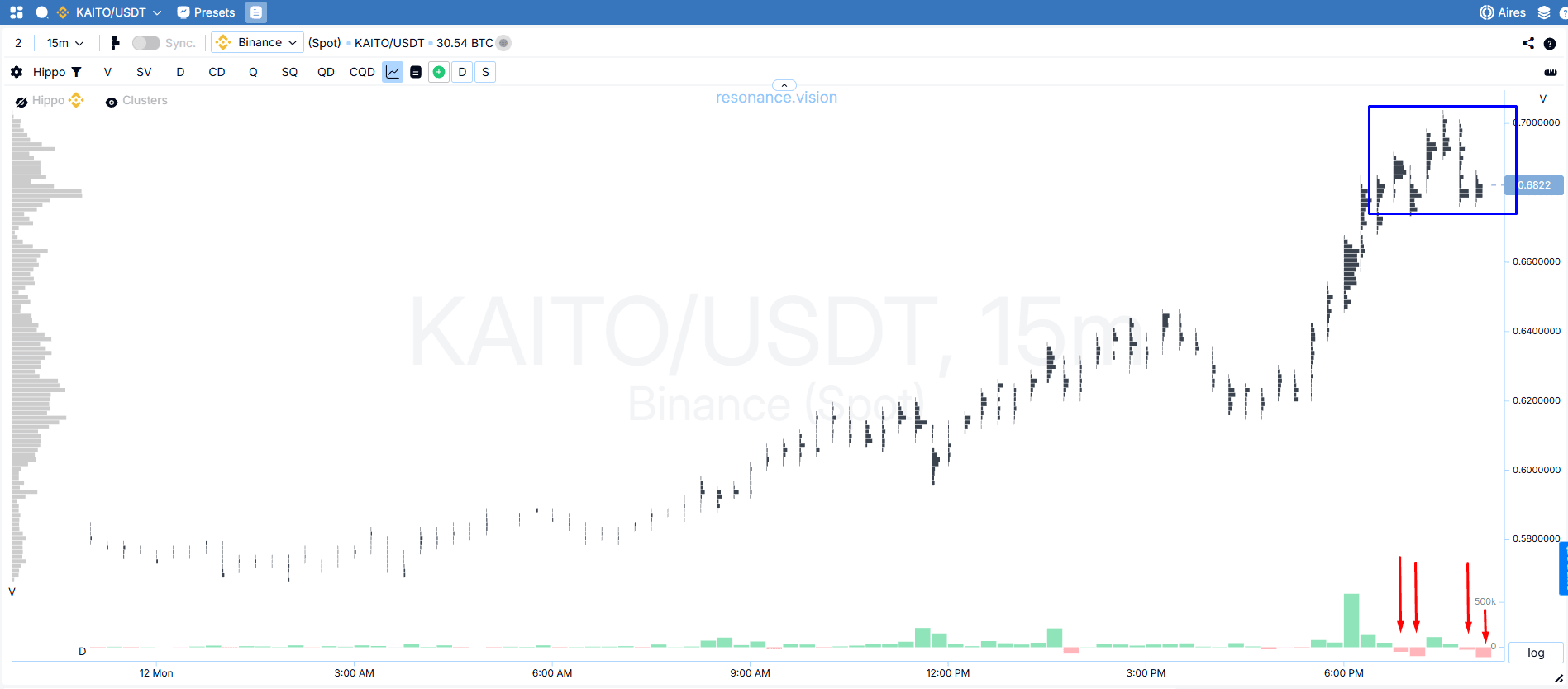
Кластерный график: покупатель олабевает, появляются плотные кластеры и маркет-продажи
По мере роста начали формироваться плотные скопления кластеров (синий прямоугольник). Активность покупателя стала снижаться, а затем появились маркет-продажи (красные стрелки). Это признак того, что импульс завершается и на монете появляются первые признаки профицита.
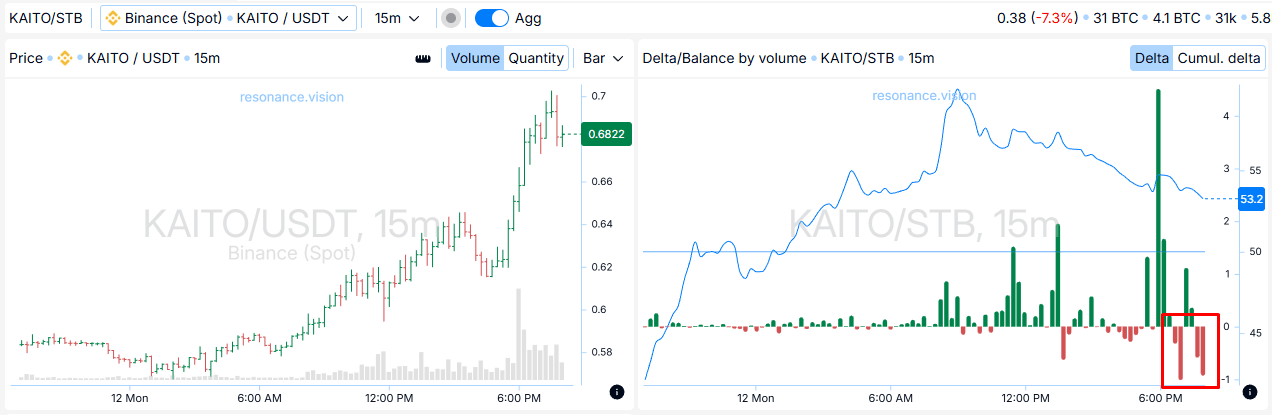
Дешборд: снижение покупок + рост продаж → риск коррекции
Агрегированные метрики усилили аргументы для закрытия сделки: снижение активности рыночных покупок и появление маркет-продаж повышают вероятность остановки движения и отката. В этой ситуации было принято решение не сопровождать позицию переносом стоп-лосса вслед за ценой, а зафиксировать объём целиком.
Результат по сделке
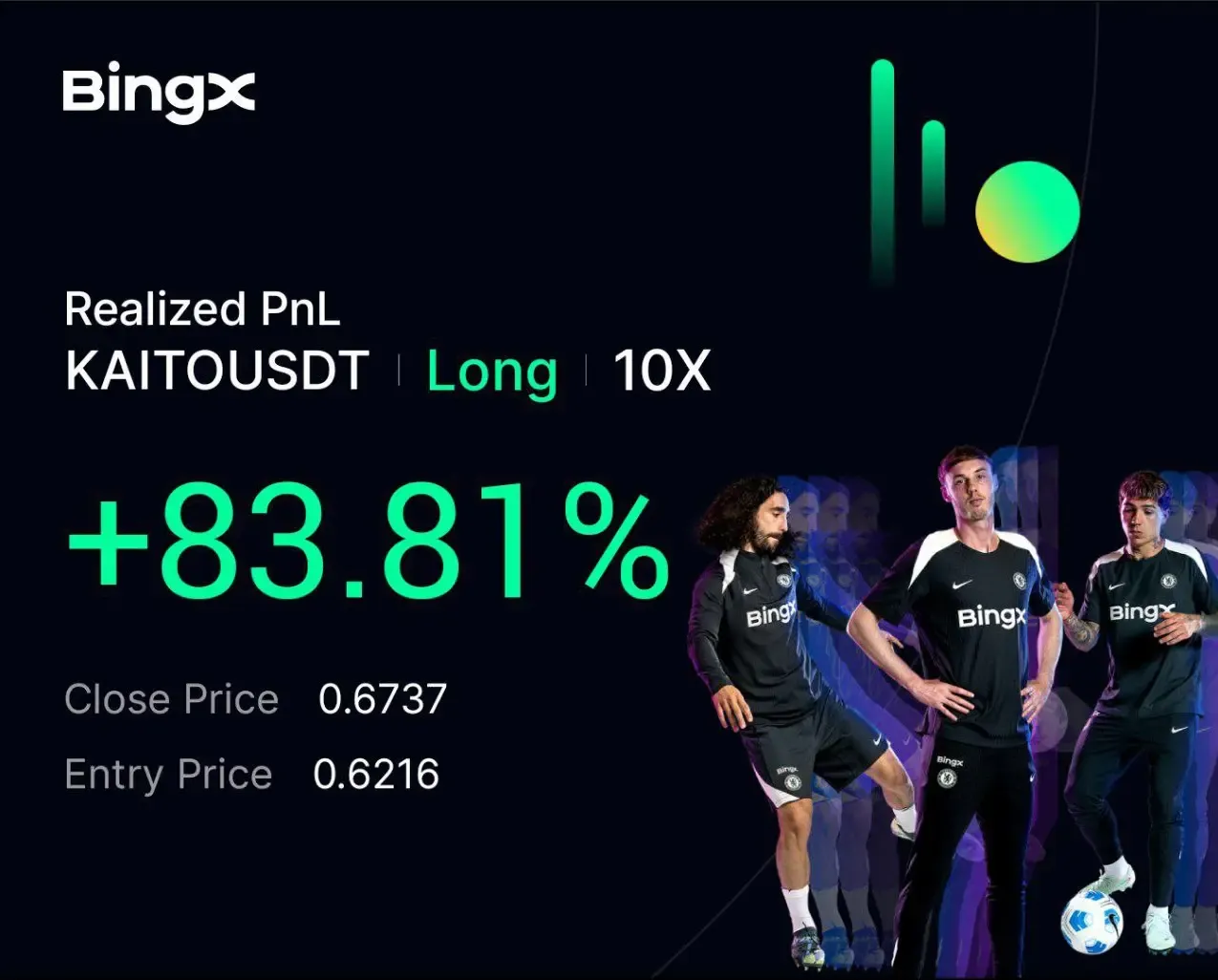
Идея отработала: забрали около 8% чистого движения. Триггером стала неэффективность продаж: продажи не приводили к снижению цены, что указывало на локальный дефицит. Переход на меньший таймфрейм позволил увидеть активность покупателя и присоединиться к движению, а агрегированные метрики помогли подтвердить дефицит и вовремя найти точку выхода.
Следи за новыми статьями в нашем телеграм канале.
Не нужно выдумывать сложных схем и искать “грааль”. Используй инструменты платформы Resonance.
Регистрируйся по ссылке — получай бонус и начинай зарабатывать:
OKX | BingX | KuCoin.
Промокод TOPBLOG дает тебе 10% скидки на любой тарифный план Resonance.
Рекомендуемые статьи