MIRA +62.4% (Направленная стратегия Резонанс)

В разборе показано, как на фоне доминирования маркет-продаж цена перестаёт снижаться, формируя признаки локального дефицита. Анализ реакции цены на объёмы, агрегированных данных и эффективности ордеров позволил объективно определить точку входа и своевременно зафиксировать движение.
Содержание

Монета: MIRA/USDT
Риск: высокий
Уровень понимания: новичок
Причины входа
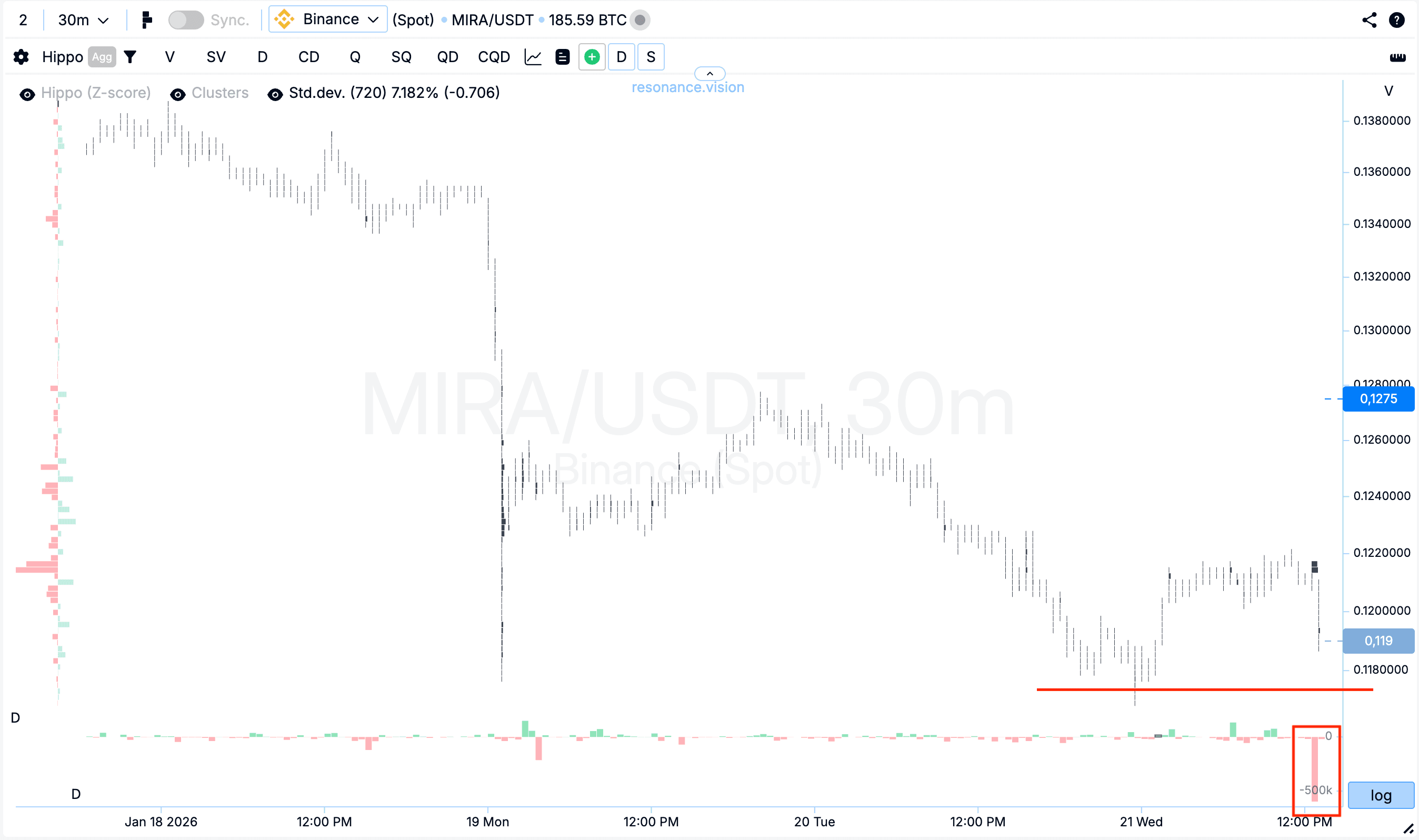
Кластерный график: после импульсного снижения цена перешла в боковую проторговку, где начали проходить существенные объёмы маркет-ордеров на продажу (красный прямоугольник). Однако, несмотря на такое давление, их эффективность заметно снизилась - цене не удалось обновить локальный минимум (красная линия).
Такая реакция указывает на формирование признаков локального дефицита со стороны продавцов и ослабление их инициативы. Когда значительные объёмы продаж перестают приводить к снижению цены, это часто становится первым сигналом к возможной смене инициативы или локальному развороту.
В Дешборде
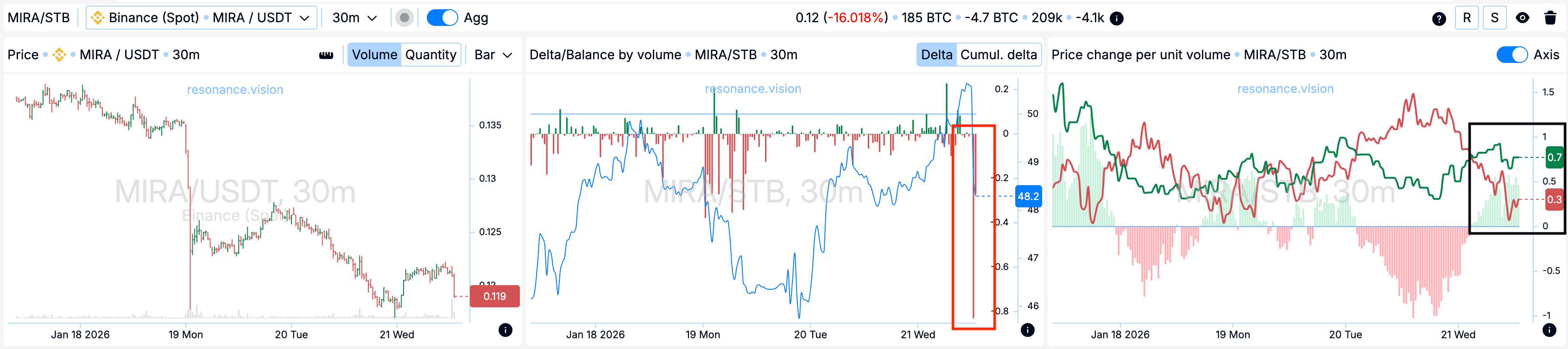
Дельта / Баланс по объёму: агрегированные данные по всем парам и биржам полностью подтверждают наблюдения с кластерного графика. В рассматриваемый период рынок находился под выраженным давлением маркет-продаж, что отчётливо видно по гистограмме дельты (красный прямоугольник).
При этом отсутствие реакции цены на данный объём указывает на активное поглощение всего входящего рыночного объёма лимитными заявками на покупку. Такая реакция формирует локальную поддержку в текущем ценовом диапазоне.
Изменение цены на единицу объёма: дополнительно видно, что эффективность воздействия рыночных ордеров начала смещаться в пользу покупателей (чёрный прямоугольник). Для движения цены вверх требуется меньший объём, чем для её снижения, что подтверждает ослабление давления со стороны продавцов.
Причины выхода
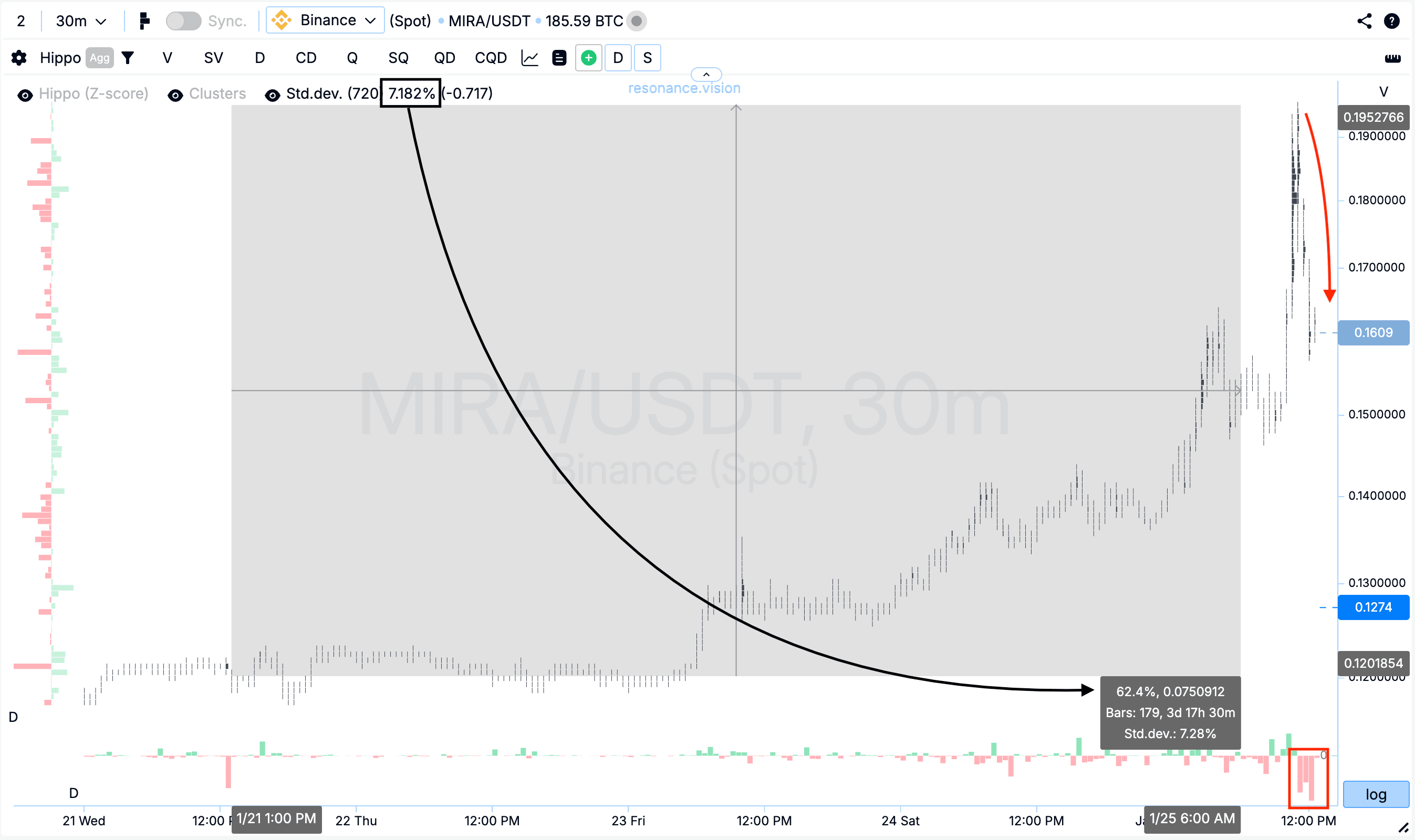
Кластерный график: от точки входа цена прошла более 60%, что соответствует свыше восьми стандартных ценовых движений (чёрный прямоугольник и стрелка). На этом фоне заметно возросла волатильность, сформировался существенный откат (красный прямоугольник и стрелка), а также начали преобладать маркет-продажи, указывающие на перехват инициативы продавцами.
С высокой вероятностью рынок перешёл в фазу поиска баланса. В таких условиях дальнейшее удержание позиции приводило бы к росту риска, поэтому фиксация прибыли выглядит наиболее взвешенным и рациональным решением.
Заключение
Данный разбор хорошо показывает, что ключевым фактором в работе с объёмами является не сам факт их появления, а реакция цены на эти объёмы. Несмотря на доминирование маркет-продаж, цена перестала обновлять минимумы, что указывало на снижение эффективности продавцов и формирование локального дефицита.
Подобные ситуации на рынке возникают достаточно часто, однако устойчивые движения удаётся забирать именно тогда, когда объём подтверждается поведением цены. Оценка эффективности рыночных ордеров, в сочетании с агрегированными данными и статистическими отклонениями, позволяет действовать объективно и принимать взвешенные торговые решения без опоры на ожидания и прогнозы.
Следи за новыми статьями в нашем телеграм канале.
Не нужно выдумывать сложных схем и искать “грааль”. Используй инструменты платформы Resonance.
Регистрируйся по ссылке — получай бонус и начинай зарабатывать:
OKX | BingX | KuCoin.
Промокод TOPBLOG дает тебе 10% скидки на любой тарифный план Resonance.
Рекомендуемые статьи