PENGO +31.7% (Напрямкова стратегія Resonance)

Ми розглянули точку входу через ознаки локального дефіциту зниження, а також підтвердили їх за агрегованими даними. Проаналізували момент втрати ефективності продавців, перехід ініціативи до покупців та оцінили динаміку. Окремо розібрали фазу виходу – збільшення волатильності, зниження ефективності покупок та досягнення аномального цінового руху. Відмінний приклад того, як поєднання кластерного аналізу та метрик ефективності допомагає приймати виважені рішення у угодах.
Зміст

Монета: PENGO/USDT
Ризик: середній
Рівень розуміння: новачок
Причини входу
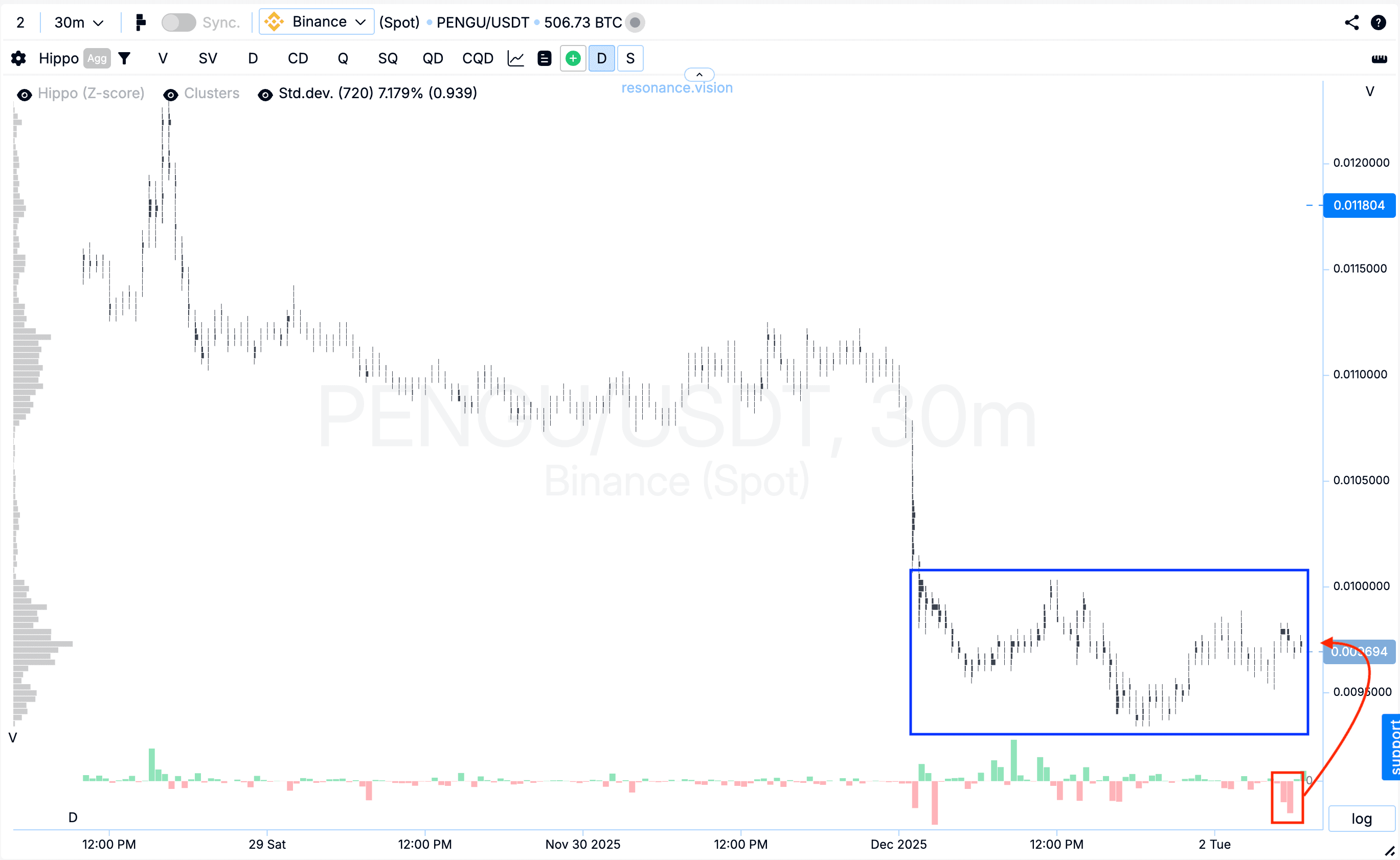
Кластерний графік: під час зниження почали формуватися кластери за об’ємом (синій прямокутник), усередині яких повторні маркет-продажі вже не давали очікуваного ефекту та не продавили ціну далі вниз (червоний прямокутник та стрілка). Така динаміка говорить про появу локального дефіциту та явне послаблення тиску з боку продавців.
У Дешборді
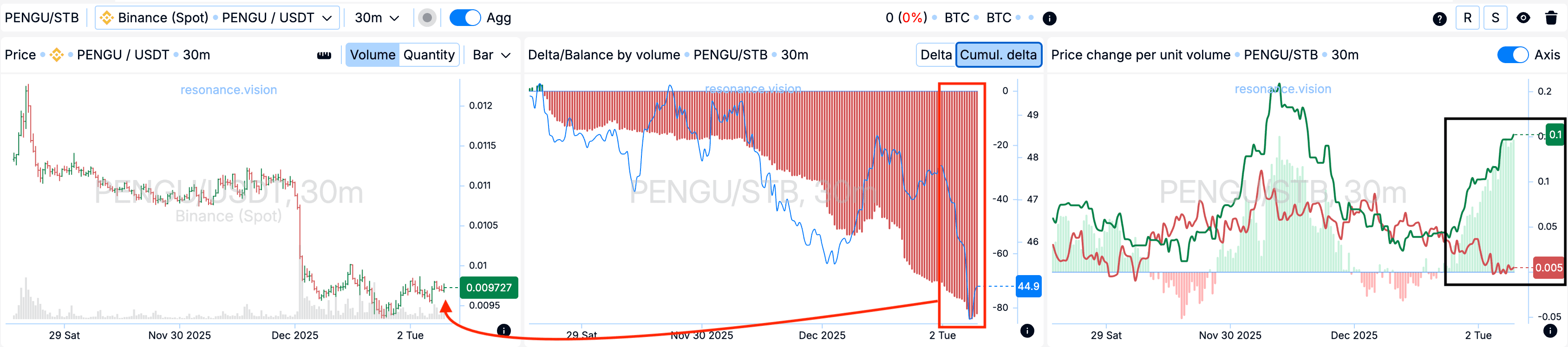
Дельта / Баланс за об’ємом: за агрегованими даними по всіх парах і бірж видно, що в цей період об’єми ринкових продажів збільшувалися - це добре відображено на гістограмі кумулятивної дельти (червоний прямокутник і стрілка). Однак, при посиленні продажів ціна більше не знижувалася. Така реакція ринку показує готовність лімітних покупців приймати весь вихідний маркет-обсяг, що формує локальну підтримку та підтверджує ослаблення тиску з боку продавців.
Зміна ціни на одиницю об’єму: додатково видно, що ефективність впливу ринкових ордерів розійшлася на користь покупців (чорний прямокутник), що вказує на зростання ефективності покупок.
Причини виходу
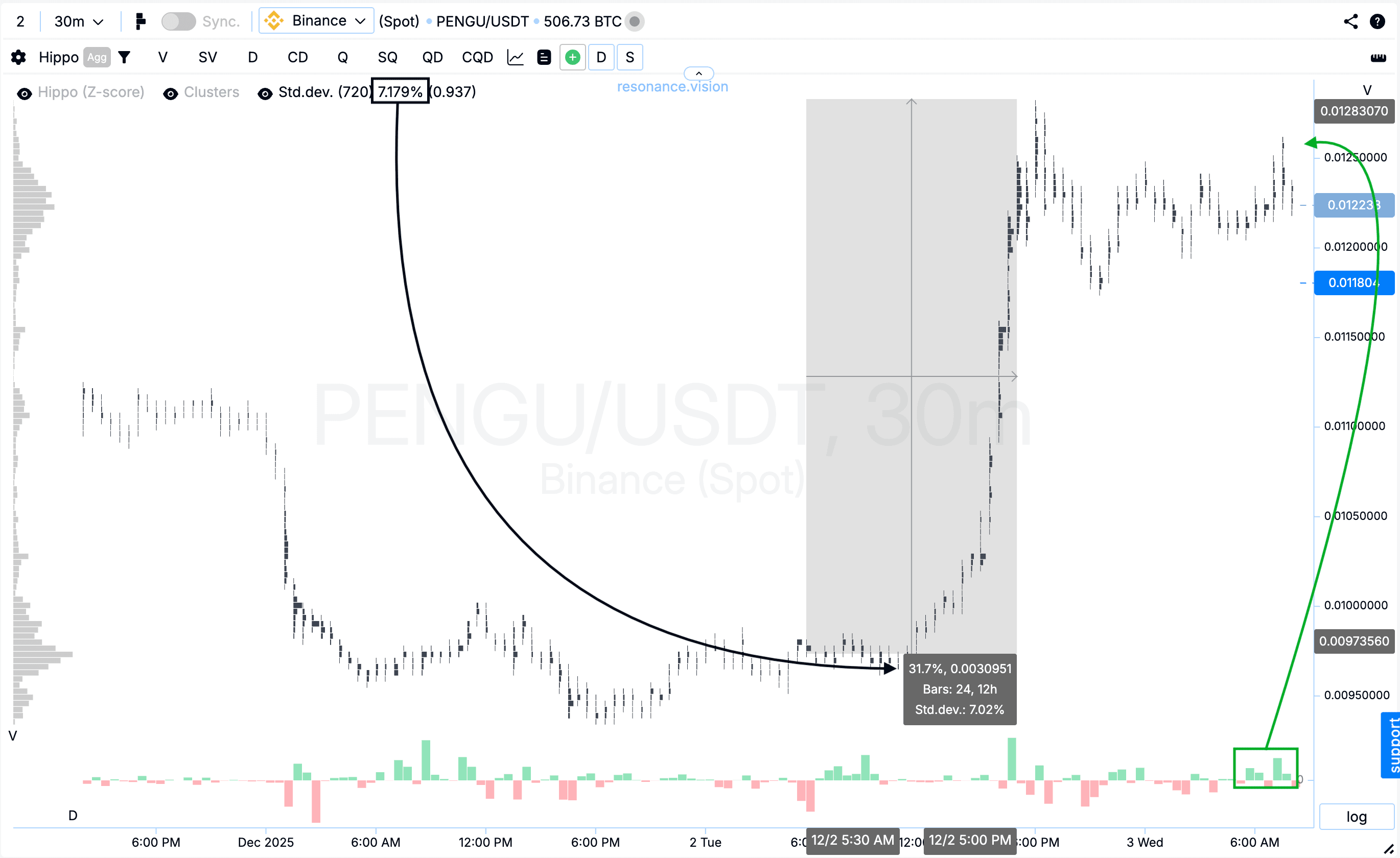
Кластерний графік: після входу ціна зросла ще на 31,7%, і у цьому ціновому діапазоні помітно збільшилася волатильність. На тлі такого руху наступні маркет-купівлі перестали давати результат – ціна більше не зростала (зелений прямокутник та стрілка). Додатково варто відзначити, що цей рух майже досяг 5 стандартних відхилень, при тому, що одне стандартне відхилення для активу становить 7,179% (чорний прямокутник і стрілка). Такий рух уже відноситься до значних та аномальних. У подібних умовах подальше утримання позиції лише підвищувало б ризики, тому фіксація прибутку була найбільш виваженим та логічним рішенням.
Висновок
Угода вийшла гарним прикладом того, як грамотне поєднання кластерного аналізу та агрегованих даних допомагає зайти в ринок у момент ослаблення продавців і вийти тоді, коли купівельна ефективність починає падати.
На зниженні ми помітили локальний дефіцит: повторні маркет-продажі перестали чинити тиск на ціну, що стало ключовим сигналом для входу.
Зростання підтвердило правильність ідеї, однак у міру розвитку руху почали з’являтися перші ознаки зниження ефективності покупців: волатильність зросла, покупки перестали тиснути на ціну, а сам рух став аномально більшим у порівнянні зі стандартними відхиленнями. У такій фазі ризик розвороту значно зростає.
Фіксація в цей момент мала оптимальне рішення - спокійна, дисциплінована робота по системі. Такий підхід дозволяє не лише знаходити якісні точки входу, а й стабільно зберігати результат.
Стеж за новими статтями у нашому телеграм каналі.
Не треба вигадувати складних схем та шукати “грааль”. Використовуйте інструменти платформи Resonance.
Реєструйся за посиланням - отримуй бонус і починай заробляти:
OKX | BingX | KuCoin.
Промокод TOPBLOG дає тобі 10% знижки на будь-який тарифний план Resonance.
Рекомендовані статті