Merging AI and Blockchain — Token Prospects at the Intersection of Two Technologies
A detailed analysis of one of the most relevant topics in today’s tech world—the merger of artificial intelligence (AI) and blockchain. We explore how AI is transforming the blockchain industry, what projects are already combining these technologies successfully, and examine the future potential of tokens in the new data economy. The key focus: how to profit from the intersection of these trends, especially relevant for traders and investors.
Table of contents
- 01Introduction: Why the Merger of AI and Blockchain Matters
- 02How AI Optimizes the Blockchain Industry
- 03Fee Optimization and Transaction Efficiency
- 04Overcoming the Blockchain Trilemma: Scalability, Security, Decentralization
- 05Automation and Smart Contract Audits
- 06Security and Anomaly Detection
- 07Transaction Monitoring and Fraud Prevention
- 08Resistance to Attacks and Fake Identities
- 09Innovations and New Capabilities at the AI-Web3 Intersection
- 10AI-Driven Oracles: Smarter Data Feeds
- 11Decentralized Autonomous Organizations (DAOs) Enhanced by AI
- 12Dynamic, Adaptive NFTs
- 13Projects Combining AI and Web3: What's Already on the Market?
- 14Decentralized Machine Learning Networks
- 15AI and Blockchain Security: Analytics and Monitoring Services
- 16Decentralized Computing for AI
- 17AI for Enhancing UX in Decentralized Applications
- 18Token Prospects in the New Data Economy
- 19Tokens as Utility and Payment
- 20Data Monetization and Digital Identity
- 21AI-Managed Tokens and Automated Tokenomics
- 22Incentives for AI Model Development
- 23How Traders and Investors Can Leverage AI + Blockchain
- 24Intelligent Web3 Automation
- 25Data Decentralization and Monetization
- 26New Asset Classes and Decentralized Apps
- 27Stronger Security and Trust
- 28Institutionalization and Regulation
- 29Practical Tips for Working with AI + Blockchain Tokens
- 30FAQ
- 31Conclusion

- How artificial intelligence is changing the blockchain industry
- Which projects are already bringing AI and Web3 together
- Perspectives on tokens in the new data economy
- Where the market could move at the intersection of these trends
Introduction: Why the Merger of AI and Blockchain Matters
Artificial intelligence and blockchain are two of the most powerful technologies of our time. AI automates, optimizes, and builds intelligent systems that process vast volumes of data and make decisions. Blockchain ensures a decentralized, transparent, and secure infrastructure for storing and transferring data and assets.
Combining these technologies opens new frontiers for innovation, creating unique business and investment opportunities. Yet, for most market participants, the technical side is less important than the chance to profit from these trends.
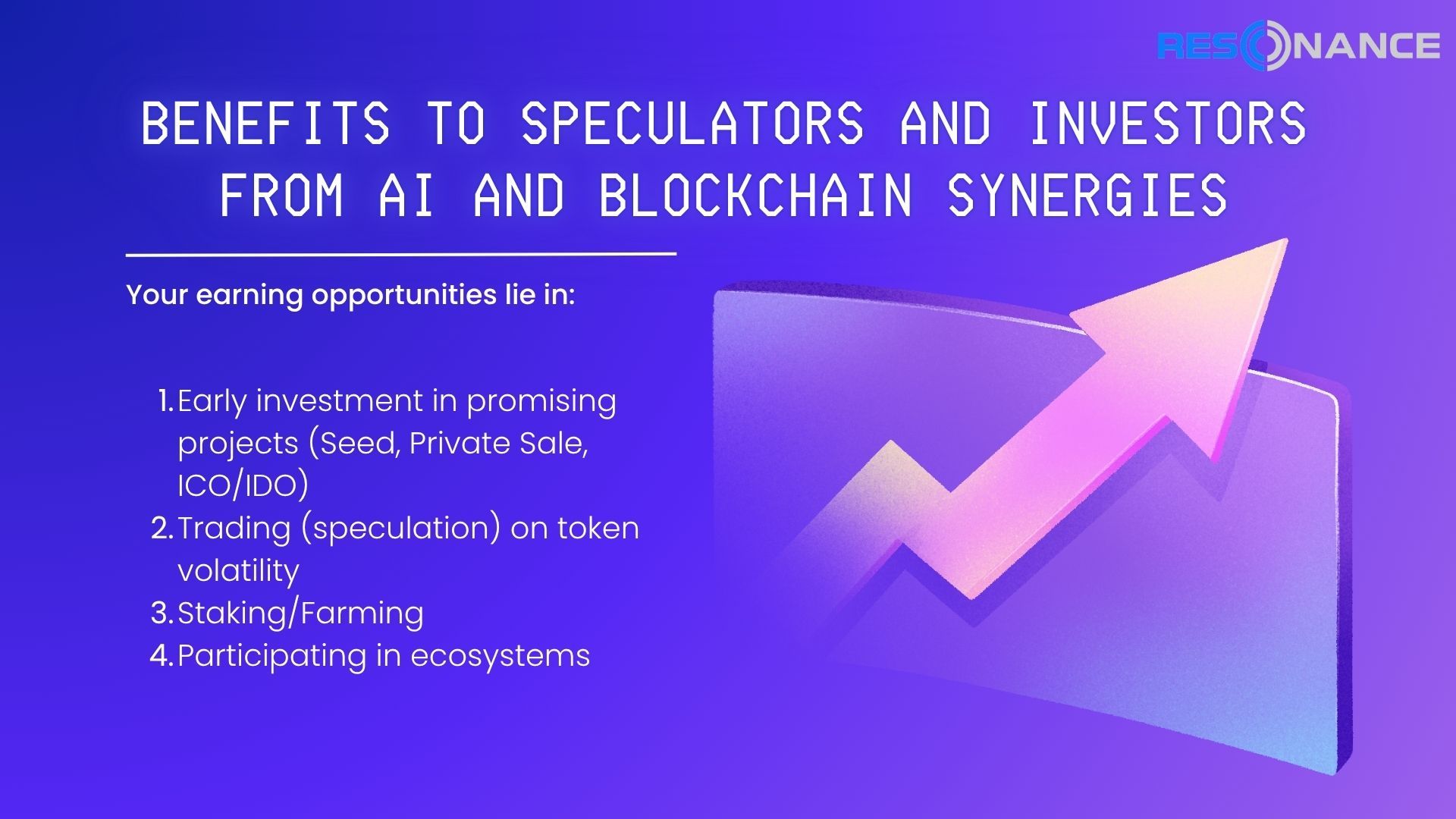
We therefore focus on four main earning strategies:
- Early investment in promising projects (Seed rounds, Private Sales, ICOs, IDOs);
- Trading and speculating on token volatility;
- Staking, farming, and participating in ecosystems (airdrops, DAOs);
- Using innovative tools and analytics to boost investment efficiency.
How AI Optimizes the Blockchain Industry
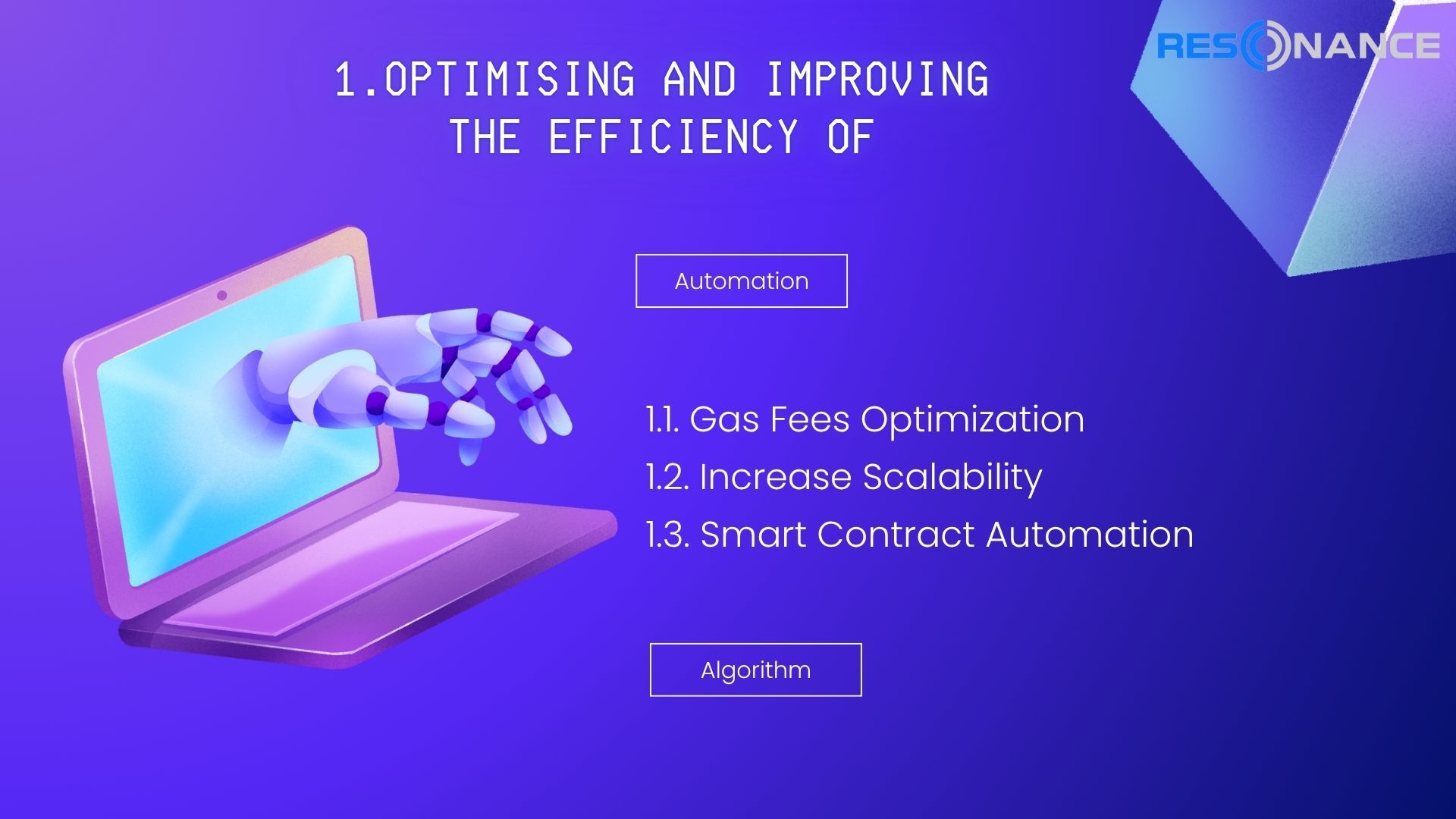
Fee Optimization and Transaction Efficiency
One of AI’s major strengths is its ability to work tirelessly and without error, analyzing large amounts of real-time data. In blockchain networks, AI can forecast load levels and adjust fees accordingly, lowering user costs and improving transaction predictability.
For investors, this means projects using AI for optimization are more attractive because efficient networks draw more users and grow in popularity.
However, for speculators, such upgrades may not cause immediate token price surges, as optimization is a long-term process.
Overcoming the Blockchain Trilemma: Scalability, Security, Decentralization
The blockchain trilemma involves finding the right balance between decentralization, security, and scalability. AI helps fine-tune consensus parameters and sharding technology, increasing network throughput.
A scalable network supports more users and projects, positively impacting token value and growth potential.
Automation and Smart Contract Audits
AI can generate smart contracts, audit them, and detect logical flaws before deployment, reducing risks and enhancing infrastructure reliability.
This accelerates product development and rollout, boosting project appeal for investors.
Security and Anomaly Detection
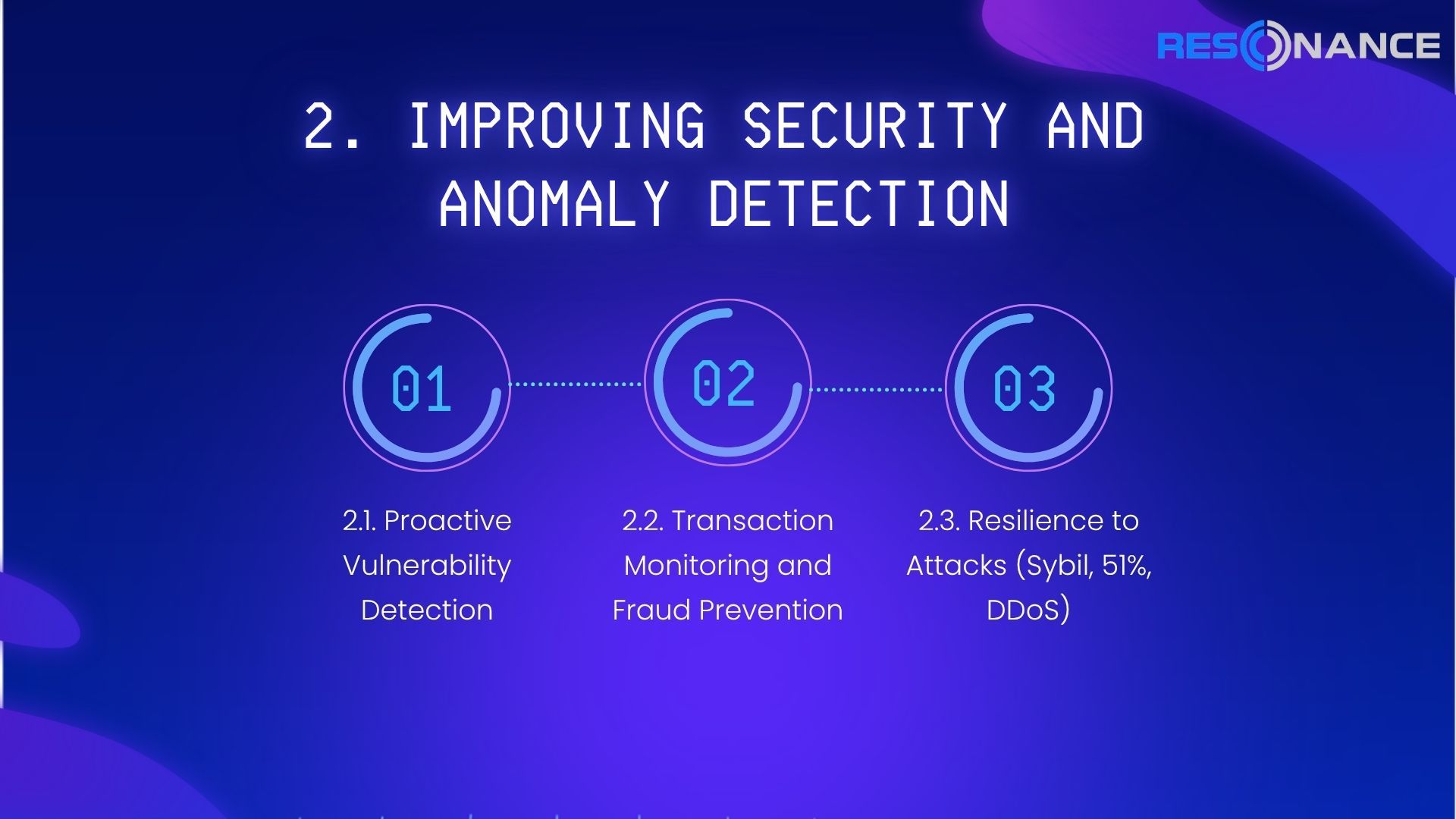
Security is critical in blockchain projects. AI analyzes millions of lines of code, detects vulnerabilities, and identifies anomalies in transactions, preventing hacks and fraud.
Real-world example: developers have sometimes exploited loopholes to mint extra tokens and dump them on exchanges, damaging reputation and token value.
AI helps minimize such risks, builds investor confidence, and supports sustainable growth.
Transaction Monitoring and Fraud Prevention
AI analyzes transaction patterns and user behavior, identifying suspicious activity and blocking fraudulent actions in real time. This is crucial in crypto, where transaction speeds are high and humans can’t react fast enough.
Resistance to Attacks and Fake Identities
AI detects hash rate concentration, abnormal traffic, and fake identities, protecting networks from attacks and other threats.
All this enhances trust and security—vital for long-term investors.
Innovations and New Capabilities at the AI-Web3 Intersection
AI-Driven Oracles: Smarter Data Feeds
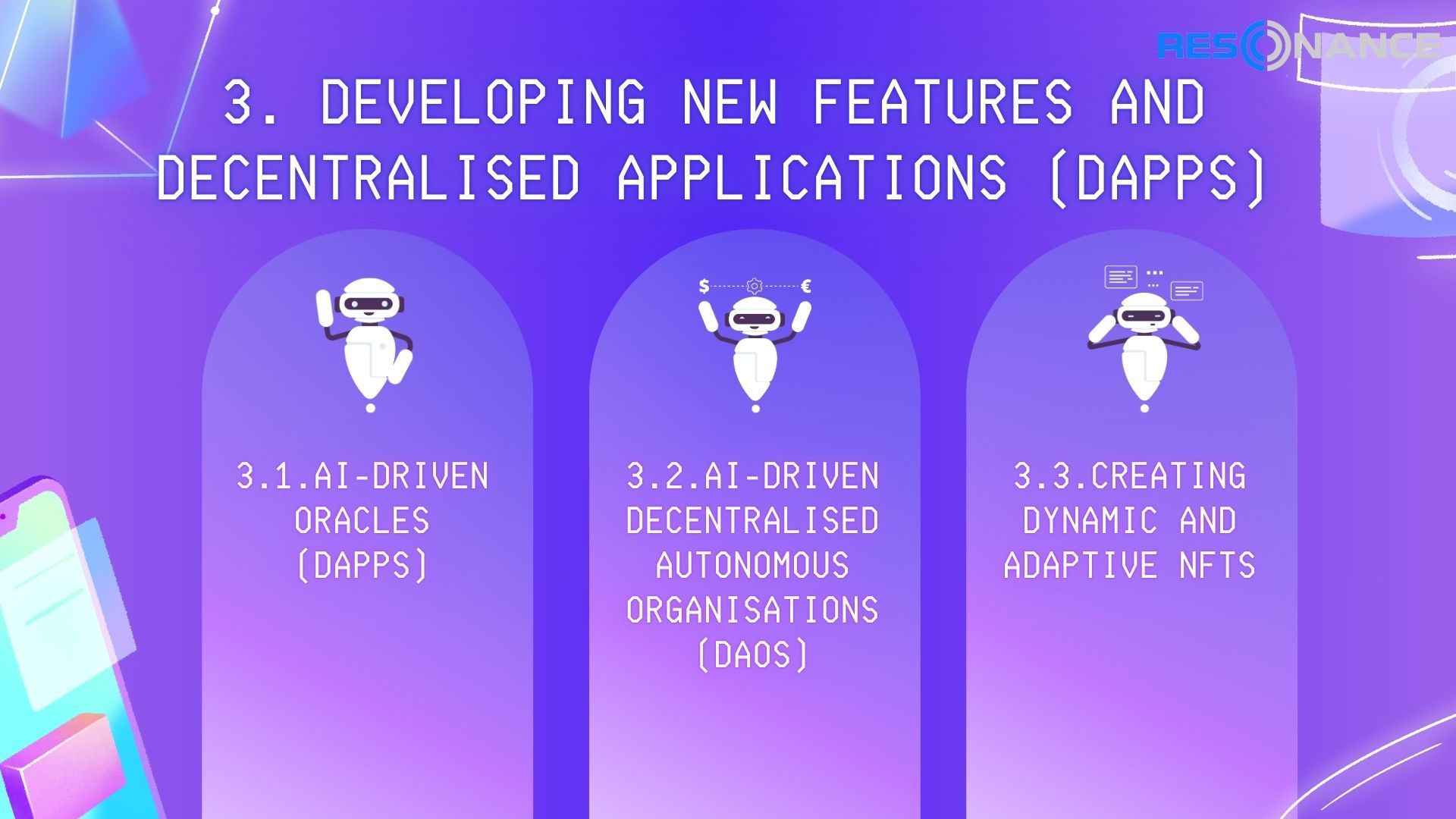
Oracles bridge blockchains with external data. AI helps them collect, validate, and analyze large volumes of data, making them more reliable and adaptable.
This is especially valuable in DeFi, gaming, and insurance, where accurate forecasts and data are critical.
For investors, such projects are attractive as they create new products and build user trust.
Decentralized Autonomous Organizations (DAOs) Enhanced by AI
AI automates DAO routines, analyzes proposals and member behavior, and creates summaries and recommendations for easier decision-making.
This increases transparency and efficiency, reducing manipulation risks and boosting community and investor trust.
Dynamic, Adaptive NFTs
Traditional NFTs are static digital assets. AI enables adaptive NFTs that change based on owner behavior, time, or other conditions.
This opens new horizons in art, gaming, and the metaverse, increasing engagement and token value.
Projects Combining AI and Web3: What’s Already on the Market?
Decentralized Machine Learning Networks
Examples include:
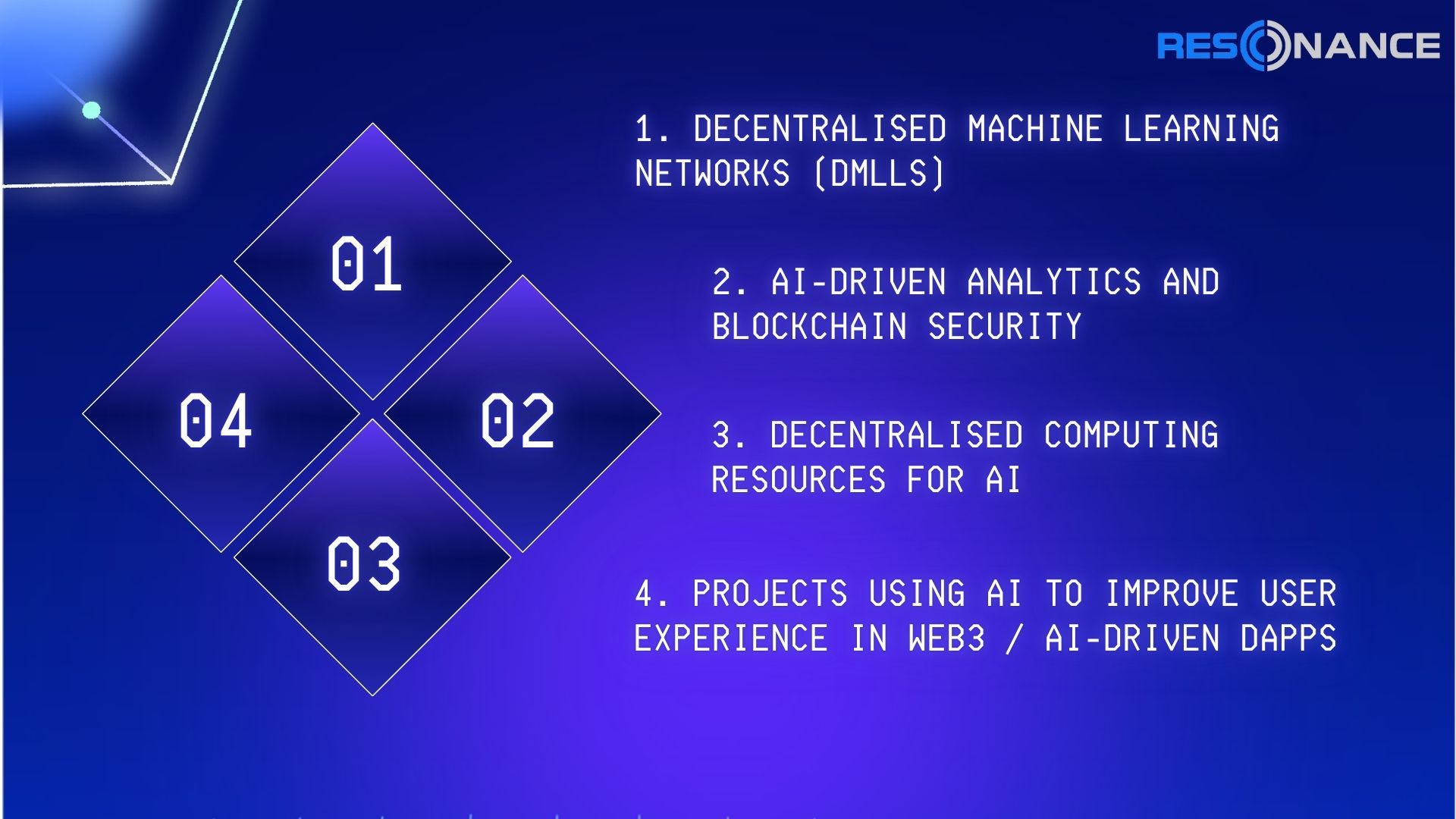
- Singularity.net (AGIX): a platform for building, sharing, and monetizing AI services in a decentralized environment;
- Fetch.ai (FET): builds a digital economy with autonomous AI agents that optimize logistics and data discovery;
- Bittensor (TAO): a decentralized machine learning network where models and values are shared, incentivizing AI development.
For investors, these projects are attractive for their partnerships, profitability, and staking opportunities.
Speculators may profit from news of partnerships and integrations, which often lead to price jumps.
AI and Blockchain Security: Analytics and Monitoring Services
Example: The Graph (GRT) indexes blockchain data and accelerates search, supporting analysis and research.
Such projects often use SaaS models with subscriptions, generating stable revenue and growth potential.
Decentralized Computing for AI
Project: Render (RNDR) — a decentralized network for graphic rendering and AI/machine learning computations. Participants contribute computing resources and earn tokens.
This creates a solid infrastructure in high demand as AI grows and governments launch AI development initiatives.
AI for Enhancing UX in Decentralized Applications
In metaverses and games, AI improves NPC behavior, making them more realistic and responsive.
Example: Virtuals Protocol (VIRTUAL) — a decentralized platform for creating and monetizing AI agents for games, metaverses, and digital entertainment. Agents interact with users, execute transactions, and generate ecosystem value.
In DeFi, AI helps manage assets, optimize yields, prevent liquidations, and minimize user risk.
Token Prospects in the New Data Economy
Tokens as Utility and Payment
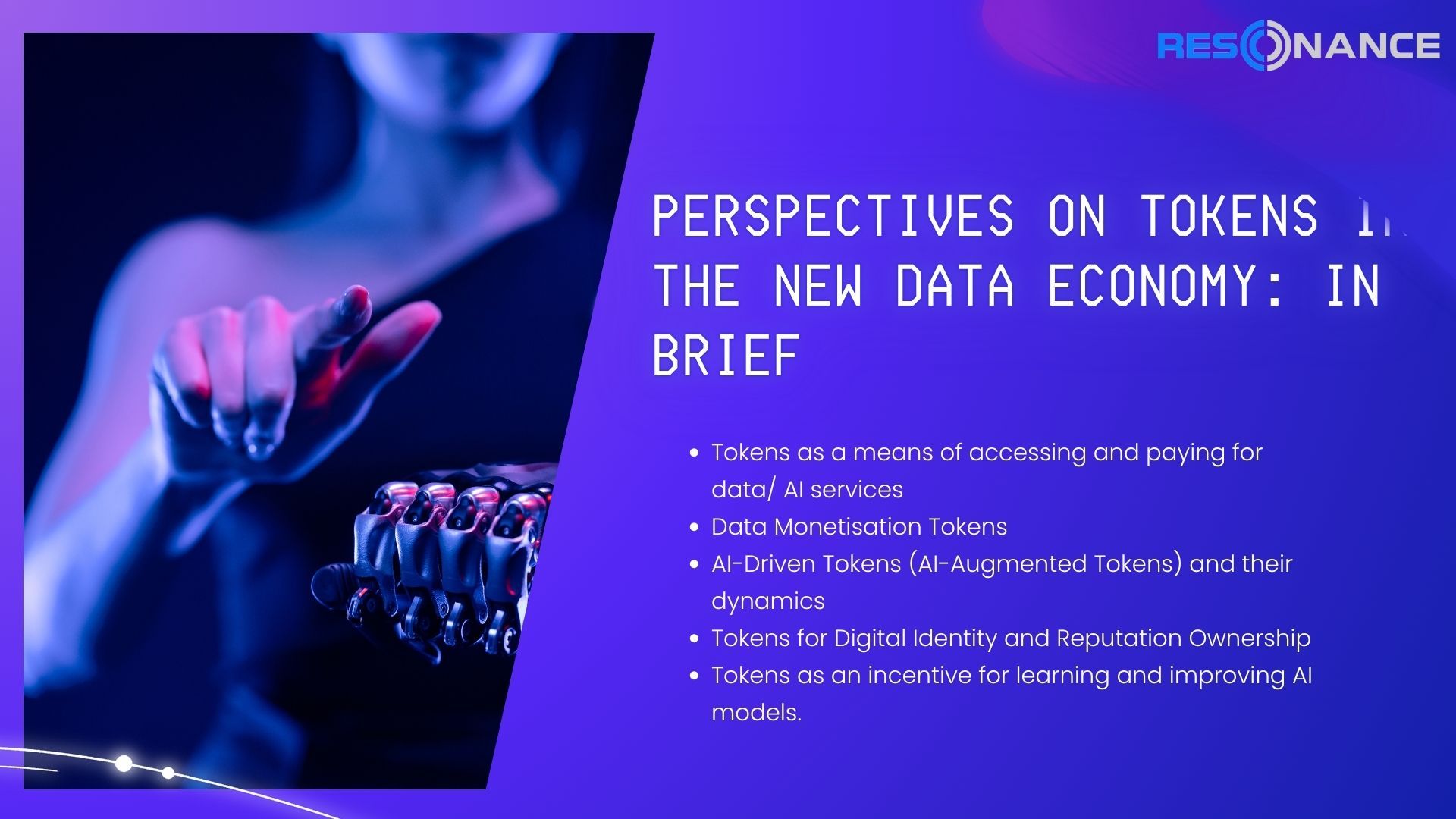
Tokens are essential in blockchain ecosystems. They pay for services like compute resources (Render), advertising (TON), and more.
Utility tokens can resemble stocks, reflecting project shares and depending on profitability and growth.
Data Monetization and Digital Identity
Users can tokenize personal data or AI models and sell them on marketplaces, e.g., in the Virtuals project.
Digital identity and reputation tied to tokens become valuable assets, influencing access to services in ecosystems.
However, this raises privacy and ethics concerns, recalling China’s social credit system.
AI-Managed Tokens and Automated Tokenomics
AI can manage tokenomics dynamically, adjusting trading strategies and staking yields based on market data. This creates smart financial instruments.
Such tools balance financial processes and reduce disputes among participants.
Incentives for AI Model Development
Training AI requires skilled prompt and ML engineers, whose salaries are above average.
Tokens can reward these specialists, encouraging contribution and boosting AI quality and efficiency.
How Traders and Investors Can Leverage AI + Blockchain
Intelligent Web3 Automation
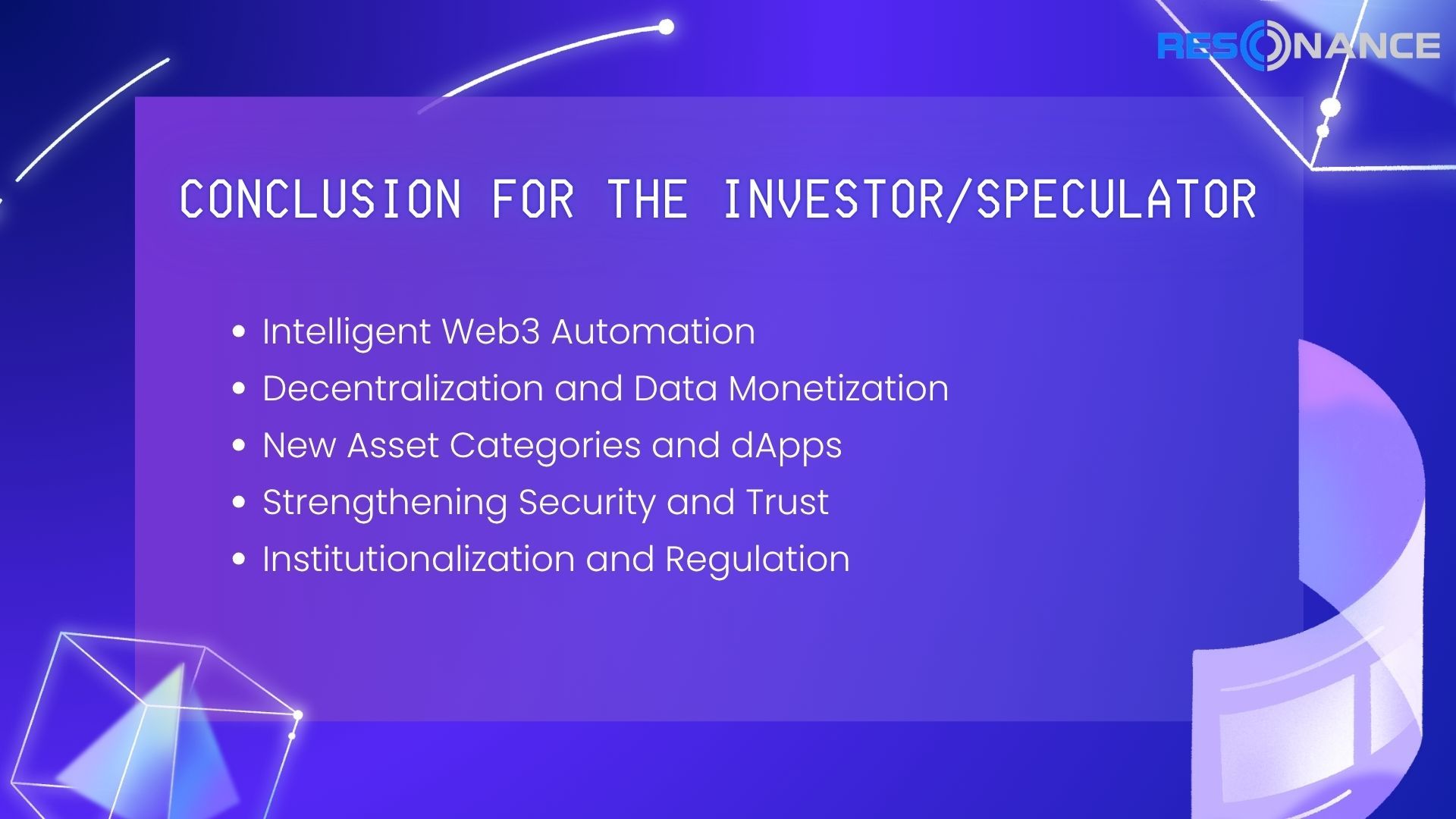
AI simplifies, accelerates, and secures blockchain processes, solving scalability and vulnerability issues, and boosting user adoption.
Data Decentralization and Monetization
A data economy emerges, rewarding users for holding tokens, staking, or training AI—reducing tech giant monopolies.
New Asset Classes and Decentralized Apps
AI-driven dApps improve UX, enabling personalized interactions that boost engagement and loyalty.
Stronger Security and Trust
AI is a key tool for fraud prevention, code audits, and defense against attacks, enhancing investor trust and project resilience.
Institutionalization and Regulation
Growing institutional interest and regulations (e.g., Genius Act in the U.S.) confirm the long-term promise of this sector.
Practical Tips for Working with AI + Blockchain Tokens
To invest or trade successfully, analyze token liquidity and look for signs of scarcity:
- Use screeners to select altcoins paired with fiat or stablecoins;
- Track trading volumes and price dynamics;
- Look for accumulation signals indicating reduced supply;
- Use staking tools and grid bots for profit during sideways markets;
- Follow news on partnerships and integrations that may affect token price.
FAQ
Can AI be used to attack blockchains?
Yes, AI is a dual-use tool. But as AI for attacks advances, so does AI for
defense—keeping the balance.
Will AI manipulate markets and trigger traders’ stop losses?
That’s a myth. AI is a set of algorithms and stats. Markets reflect economics and human behavior. Humans make the final call.
Example: BlackRock uses AI for analysis, but humans make decisions.
How fast is AI evolving in crypto?
Very fast. A few years ago, tools like ChatGPT didn’t exist. Today, they’re everywhere.
But deep AI integration into trading and portfolio management takes time and expertise.
Can you fully trust AI analytics?
AI can be wrong. Always cross-check. Use it as a supporting tool, not your only decision source.
Conclusion
The convergence of AI and blockchain isn’t just a trend—it’s a fundamental shift in how the digital economy is built. AI enhances security, scalability, automation, and innovation, making blockchain more appealing to users and investors.
For traders and investors, success depends on picking the right projects, analyzing liquidity, and using tools like staking and grid bots. Long-term gains come from understanding these changes and adapting to market evolution.
We recommend using Resonance platform analytics and our educational materials to improve your skills in crypto trading.
Stay informed, analyze wisely, and prepare for new opportunities in the AI + blockchain era!
No need to invent complex schemes and look for the "grail". Use the Resonance platform tools.
Register via the link — get a bonus and start earning:
OKX | BingX | KuCoin.
Promo code TOPBLOG gives you a 10% discount on any Resonance tariff plan.
Recommended articles