Braiins Warns of Attacks on Bitcoin Mining
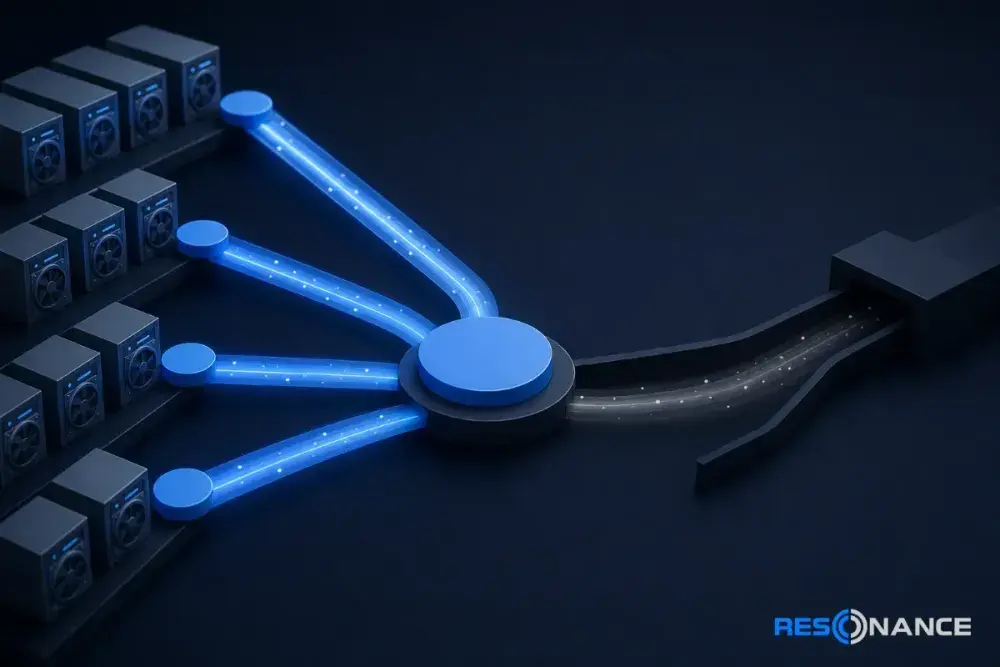
Braiins identified 24 incidents from Nov. 7 to 20. Four larger attacks on Nov. 20 each affected between 1,050 and 1,600 mining sites, mostly in Europe.
Table of contents










Bitcoin mining pool operator Braiins warned that attacks had affected more than 1,000 mining sites. It identified 24 incidents from Nov. 7 to 20 in which an attacker redirected traffic between miners and their pools to claim rewards for work done by other people’s machines.
How the attacks grew
Braiins said the incidents were brief, but the computing power affected in a single attack grew nearly elevenfold in two weeks, from under 175 PH/s (petahashes per second) to 1.9 EH/s (exahashes per second). MineOrNot estimated Bitcoin’s total hashrate at 1,016 EH/s on Nov. 20, putting the largest incident at about 0.19% of the network’s computing power.
The earlier incidents mainly hit sites in Brazil and Argentina. Four larger attacks on Nov. 20 each affected 1,050 to 1,600 sites, mostly in Europe. Braiins did not say whether those sites were large farms or smaller independent operations.
Why miners may not notice the losses
Unsecured Stratum V1 connections do not let miners verify the pool’s identity. Mining machines can keep running, leaving operators paying for electricity without realizing that someone else is collecting the rewards. Braiins said neither its pool nor the affected machines were hacked directly. It did not disclose miners’ losses.
Braiins reviewed the largest pools on Nov. 23 and found that most still offered only unsecured Stratum V1 connections. It recommended switching to Stratum V2, which protects communications and lets miners verify the pool’s identity. Miners who cannot upgrade can use encrypted Stratum V1 if their pool offers it and their mining software can verify the pool’s identity.
Analysis for traders
- Strengths. The largest incident affected about 0.19% of Bitcoin’s hashrate. That gives traders a benchmark for distinguishing the impact on individual operators from the scale of the incident across the BTC network.
- Weaknesses. Machines can keep running even when rewards are diverted. Without disclosed losses, it is hard to assess the impact on miners’ revenue.
- Opportunities. Support for Stratum V2 or encrypted Stratum V1 with pool identity verification could help traders assess how well major pools protect miners’ connections.
- Threats. Braiins says the vast majority of Bitcoin’s hashrate still uses unsecured Stratum V1. Repeat attacks could cut miners’ revenue without lowering their electricity bills. That makes this a risk management issue for traders, but site counts alone cannot show how much money was lost.
What to watch next
- Whether more attacks are reported, and how many sites and how much hashrate each incident affects.
- Whether major pools add Stratum V2 or encrypted Stratum V1 with pool identity verification.
- Whether operators disclose how much they lost in mining rewards.
Source: cointelegraph.com
No need to invent complex schemes or hunt for the “grail”. Use the tools of the Resonance platform.
Sign up on exchanges via our links and get bonuses:
OKX | BingX | KuCoin.
Prop firm — trade with the company’s capital: Kraken.
Promo code TOPBLOG gives you 10% off any Resonance plan.


Recommended articles