Tether Charged 20% to Return Stolen USDT
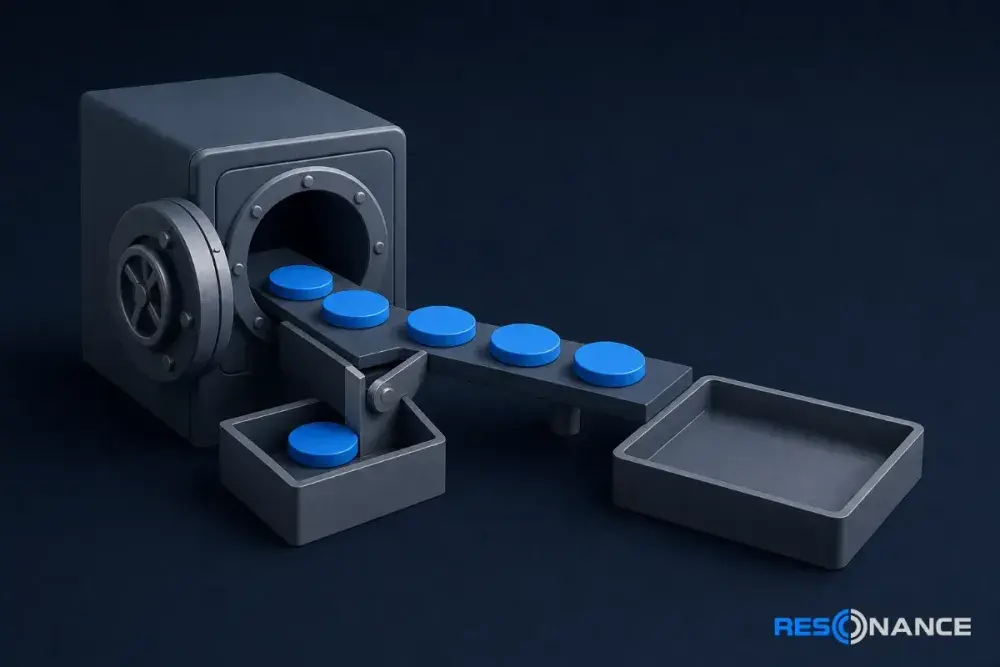
Bloomberg found that Tether deducted a 20% fee in some cases when returning stolen USDT. Singapore exchange Bittok received no USDT more than five years after its 2020 hack.
Table of contents










Stablecoin issuer Tether deducted a 20% fee when returning stolen USDT to some hack victims, Bloomberg reported in an investigation into the aftermath of the Binance attack. One case involved Singapore exchange Bittok Technology, which received no USDT more than five years after it was hacked in June 2020.
How Tether handled stolen USDT
Hackers stole $50 million from Bittok. Tether froze some of the funds, and its lawyer told the company that acquired the exchange that Tether would charge a 20% reissuance fee on the amount returned. Bloomberg’s sources said victims in several other cases received USDT in installments, subject to the same fee.
Tether’s published rules list a lower fee of up to 10%, with a $1,000 minimum. That rate applies to mistaken transfers, not thefts or hacks. Customers who spoke to Bloomberg described inconsistent handling: in some cases, tokens continued to move; in others, they were frozen indefinitely.
Tether’s explanation
Tether CEO Paolo Ardoino said the company reissues funds in stages in civil cases because multiple parties may claim the same assets. A Tether spokesperson said the issuer had reissued $1.2 billion in USDT and that fees helped cover the process and legal costs.
What issuers froze after the Binance hack
Following the roughly $6.3 billion Binance hack, Tether froze more than $1.5 billion in USDT in about 30 minutes, while Circle blocked $1.1 billion in USDC. Both issuers acted at the request of Binance and US authorities. Their two stablecoins account for 86% of stablecoins in circulation. For Circle, the move was a departure from its previous practice of freezing assets only under a court order.
Analysis for traders
- Strengths. Freezing more than $1.5 billion in USDT in about half an hour shows that Tether can quickly stop some stolen funds from moving.
- Weaknesses. Bittok’s case shows that an exchange can wait years without getting its USDT back. Frozen tokens should not be counted as available liquidity.
- Opportunities. If Tether publishes separate terms for stolen USDT, exchanges and traders could better estimate how much they might recover and when.
- Threats. A 20% fee could leave victims short even when Tether reissues their USDT. Full recovery is not an assumption to build into risk management.
What to watch next
- Whether Tether publishes separate rules for stolen USDT, including fees and reissuance timelines.
- How much of the USDT and USDC frozen after the Binance hack reaches victims, and whether issuers deduct any fees.
Source: ForkLog
No need to invent complex schemes or hunt for the “grail”. Use the tools of the Resonance platform.
Sign up on exchanges via our links and get bonuses:
OKX | BingX | KuCoin.
Prop firm — trade with the company’s capital: Kraken.
Promo code TOPBLOG gives you 10% off any Resonance plan.


Recommended articles