ECB seeks partners for tokenized deposit and securities tests
The ECB is recruiting Appia groups for three workstreams: bank deposits and payments, securities, and shared network rules. The 2027 tests will inform a blueprint due by 2028.
Table of contents
The European Central Bank (ECB) invited groups of financial market participants to run tests under Appia on Nov. 20. First-round applications are due at noon Central European Time on Dec. 11, 2026, with later submissions reviewed on a rolling basis. The work is expected to take place in 2027 and inform the Eurosystem’s Appia blueprint, due by 2028.
Who can take part
Groups testing deposits or shared network rules need at least five independent legal entities across two or more euro-area countries. A majority of the entities counted toward that minimum must be authorized, supervised or overseen financial firms. At least two members must participate in TARGET (the Eurosystem’s settlement infrastructure) or qualify for access.
Securities groups need representation from only one euro-area country. The Eurosystem will consider smaller groups if they cover the roles needed for the test, such as two market participants and a ledger operator eligible to connect to Pontes. Proposals can show a credible path to settling in central bank money. Selected groups will sign a written agreement, cover their own costs and provide their own test environments and technical support.
What Appia will test
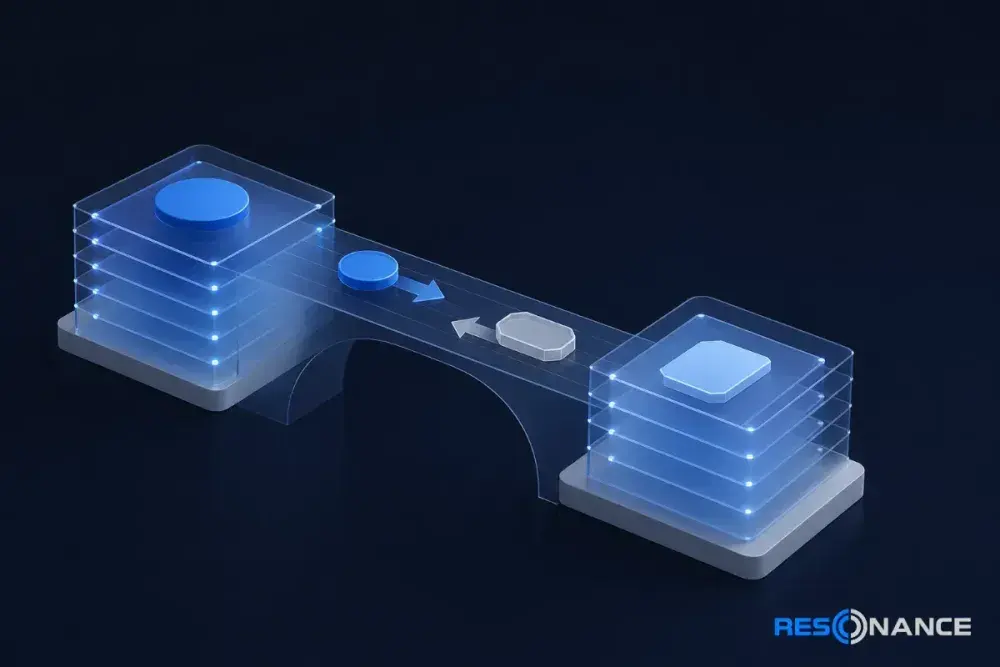
The deposit workstream will look at how banks can offset payments, clear the resulting obligations and settle them in simulated tokenized central bank money. Groups can use their own distributed ledgers and propose ways to link the networks on which banks issue deposits. Shared network governance proposals must use a specific example to show what rules are needed for access, compliance controls and links to existing infrastructure.
The securities workstream will examine how firms can move collateral in repos (sales with an agreement to buy the asset back) and reuse cash across linked trades so they need to set aside less up front. The ECB also wants proposals on settlement and programmable features for tokenized money market funds, including what corporate treasurers would need to use them.
Analysis for traders
- Strengths. Pontes has already handled the cash leg of the European Stability Mechanism’s €1 billion digital bond. That gives the tokenized securities market a live settlement example against which to assess new proposals.
- Weaknesses. Appia’s deposit tests use simulated central bank money. They may show whether the settlement process works, but they will not establish demand for tokenized deposits in live transactions.
- Opportunities. If the repo tests show that firms can reuse cash across linked trades, they may need to set aside less money in advance. That would address settlement liquidity, but it would not guarantee a narrower bid-ask spread.
- Threats. If tokenized asset networks adopt incompatible rules, firms may still have to park cash at multiple venues even if settlement works within each network.
What to watch next
- Which groups make the first round and whether they propose tests spanning multiple ledgers.
- Whether the 2027 tests show that linked repo trades can be settled with less cash set aside up front.
- Which network interoperability rules make it into the Appia blueprint due by 2028.
Source: crypto.news
No need to invent complex schemes or hunt for the “grail”. Use the tools of the Resonance platform.
Sign up on exchanges via our links and get bonuses:
OKX | BingX | KuCoin.
Prop firm — trade with the company’s capital: Kraken.
Promo code TOPBLOG gives you 10% off any Resonance plan.
Recommended articles